The Plastic Plant
Words by Madeleine Rafferty
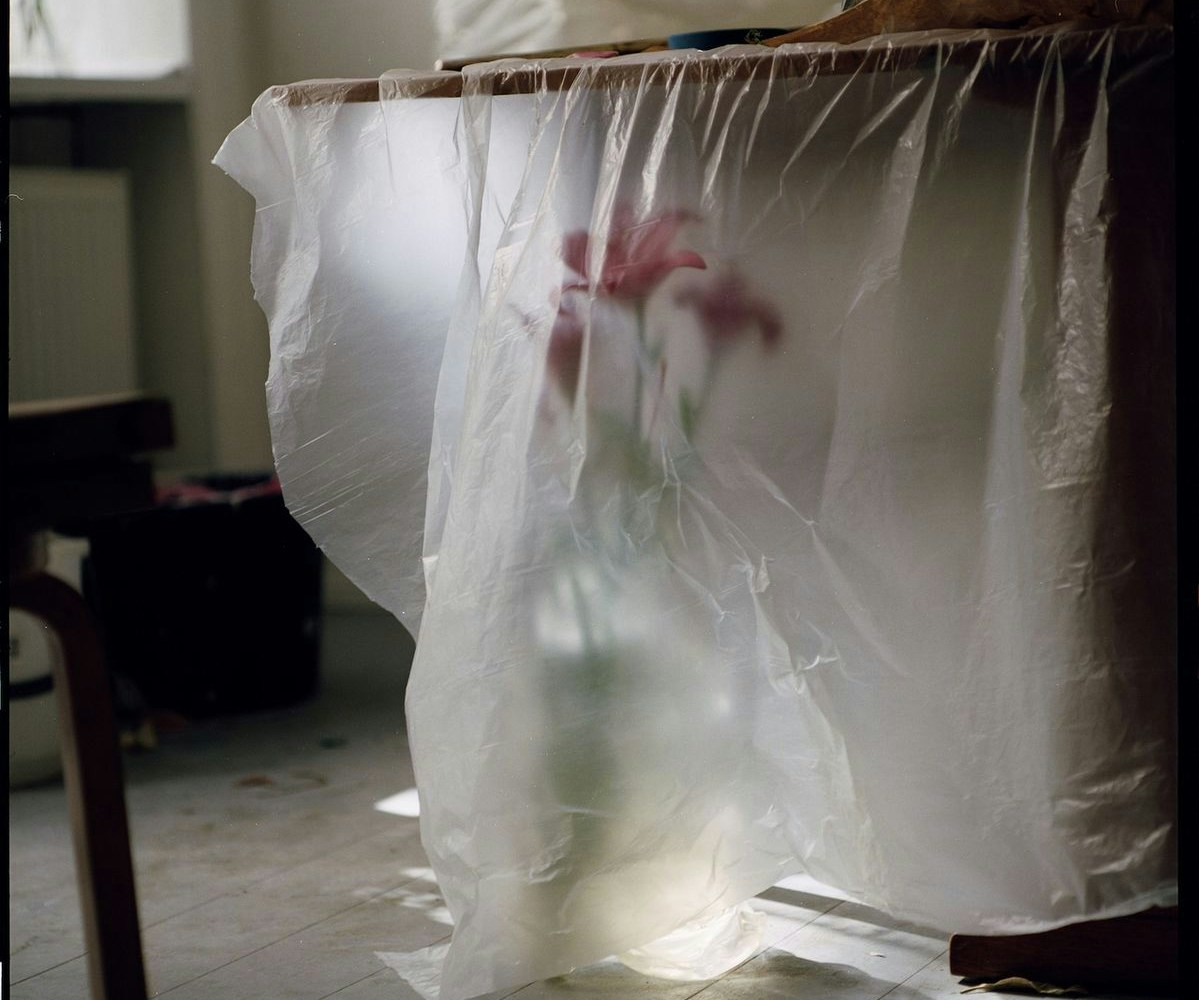
Photo: Eros Torso by Oliver Sundqvist & Frederik Nystrup Larsen
At the time, $49.95 for a Potted Faux Eucalyptus seemed like a small price to pay for the relief of not having to keep anything else alive.
I bought the plastic plant when we were building my son’s nursery. My husband and I sat on the hardwood floor surrounded by the panels and rails that would soon be his crib, like a scene in a movie montage of time’s passage in a marriage. I made tidy piles of bolts and washers as he performed the repetitive task of anchoring and screwing. In a kind of domestic choreography, I anticipated his next move, and we wordlessly built the crib together with an ease born of years of cohabitation.
Of course, babies don’t sleep in cribs until they are six months old, but I didn’t know that then. I wouldn’t have cared. It was the act of building the crib that was important. Though my baby pulsed and pushed inside of me, so too did the heartache of trying and the heartbreak of miscarriage. It was in the construction of this sound and sturdy structure, something that I could hold onto, that I finally believed this baby was real and this baby was coming.
*
The first person I told how badly I wanted a baby was my husband, though he wasn’t my husband then. It was New Year's day, 2018. Dawn pushed through the dirty screened windows of the Williamsburg warehouse he had just bought with his sister, the site of the party the night before. We lay on an exposed mattress on the floor, too high or drunk or free to notice that it was freezing and it was morning and the party was over.
“Tell me a secret,” he said with wide eyes and crusty lips. So I told him all of them. I told him I was worried I was too promiscuous, that I desperately craved vulnerability, that I used sex to strip people down to the form I craved most, bare, exposed, wholly available to me, that after all the parties and the after parties, what I really wanted was a home and a baby and an herb garden. I told him this embarrassed me because I thought I should want more than that. That I feared the thing I wanted most for my life was too small and ordinary. That I feared that this small and ordinary thing, to have a baby and a home and an herb garden, would happen for other people, but not for me.
I told him all this because he was a kind and familiar face I knew from high school. Because there was no threat of romance. Because I was too high or drunk or free not to.
"I could tell you about the destruction caused in the wake of addiction — the deception and denial and devastation or the cruelty of its chaos — but you’ve heard that story. I want to tell you about the seeds we planted in the rubble."
Besides the crib, the nursery was empty of things. I shopped with divine purpose to fill it. I measured drawers and bought tiny drawer organizers for tiny socks. Cardigans for newborns – nevermind that it was summer – arrived from local sellers on Etsy with handwritten notes, welcoming my new baby. But really, welcoming me into the club of tiny socks in tiny drawers.
It was in this shopping fugue state, with my laptop warming my bulging belly as I reviewed tab after tab, that I came across it. I hadn’t gone looking. It had found me.
Potted faux eucalyptus soothes your environment. Lush, naturalistic plant drapes beautifully from textured grey pot, perfect on a desk or shelf. Plastic, ceramic, styrofoam.
Beneath the description, a single review, dated 2 years ago. Shakeyjakeee. Brings so much life to the space. ★★★★☆.
I pressed buy now.

When the box arrived, it was smaller than I had expected. The tidy cardboard cube was no bigger than my hand and no heavier than a loaf of bread. I used a butter knife to push into the acrylic tape until it yielded, and pulled the plastic plant out of the box. Its dusty green spotted vines unfurled like a woman letting down her bun. I held a heart shaped leaf delicately in my palm and tried and failed to remember how photosynthesis worked. I thought of the brimming potentiality of a seed and the impossibility that all life is born of something so small and so mighty. Though of course, not this plant. Even the pot was fake.
*
When my husband came home that evening, I took him up to the empty nursery and showed him the plant. I had put it up high, on a shelf I had to balance on a chair to reach, something I didn’t think I should do given my shifted center of gravity, but did anyway.
“What do you think?” I asked.
“Nice,” he said. “Where’d you get it?”
“At that cute little nursery off 6. They sell houseplants along with starters. I didn’t realize.”
It was one of those lies that takes you by surprise. The kind that, when you hear yourself speaking, you too believe it for a moment because you speak with such conviction. The kind of lie that makes you wonder about yourself.
He kept walking to the bathroom. I continued.
“It’s too high up for me to water. Will you take care of it?”
“Sure,” he said through the cracked bathroom door.
And that was how it began.
*
I don’t remember exactly when the partying stopped. Maybe it was COVID. Maybe it was turning 30. Maybe it was hangovers so big and so bad I was rendered speechless and thoughtless in a dark quiet room. By grace or by god or by luck of genetic draw, I was able to put down the drugs and the booze as easily as I had picked them up.
It was different for my husband. The party stopped, or we stopped going to it, but the use continued. Only now it was out of sight, in stolen moments. What once was ours was now his and his alone.
They say addiction is the opposite of connection. Our worlds had gotten so small: his – consumed by the herculean effort of living two lives, one above ground, one below; mine – a myopic commitment to excavate whatever he was hiding beneath the surface.
I cancelled plans to surveil our home like a detective, checking pockets, unfurling receipts, licking white powders on random surfaces: baby powder, salt, unidentifiable, cocaine. The hurried high of looking in places you shouldn’t for things you don’t want to find — even that high was gone. Everywhere I looked, I found.
*
I could tell you about the destruction caused in the wake of addiction — the deception and denial and devastation or the cruelty of its chaos — but you’ve heard that story. I want to tell you about the seeds we planted in the rubble.

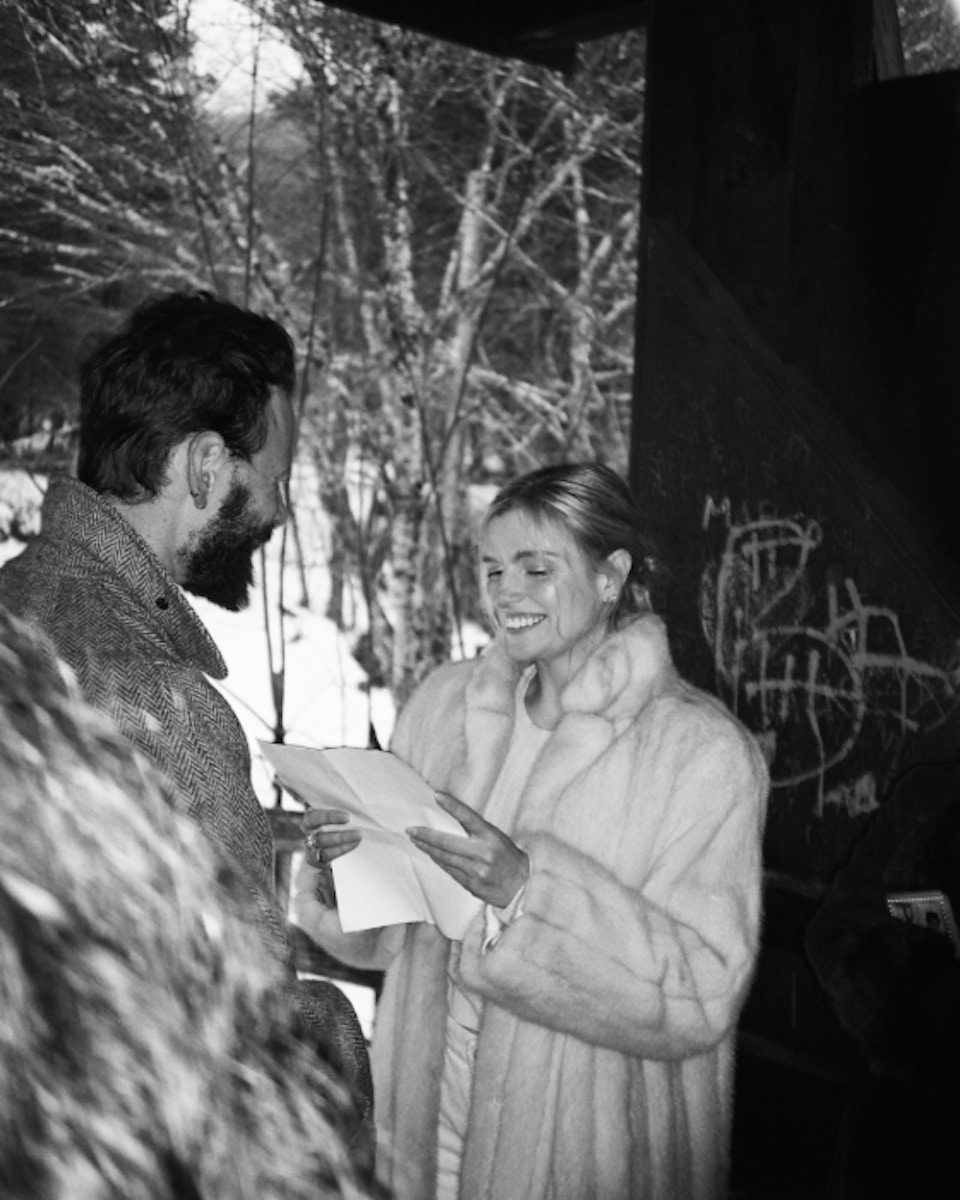
We bought the house. He went to rehab. We grew herbs, yes, but also zucchinis and radishes and watermelons the size of marbles we cut into slivers and served on dinner plates. He went to local recovery meetings. I learned to drive. Every 28 days I peed on ovulation sticks until they told us it was time to fuck, and we did with purpose. We got married under a snowy covered bridge on New Years Eve and lay in bed until sunrise, whispering secrets as we had five years before, only this time we knew them all already.
We got pregnant that night. When we found out, we giggled with glee and pretended we had been teenage virgins who eloped to consummate our ravenous young love. We said how stupid – who actually gets pregnant on their wedding night? What we meant was how sacred. We felt in our bones that our love was big enough to hold us for a lifetime. This was cell-dividing proof of it.
“Husband, your plant is looking so happy up there. What have you been doing?” I would ask.
“Just good vibes,” he would say.
“That’s it?”
“The biology of belief baby.”
*
“Husband, do you think he’s grown?”
“Yeah! Look at that long tendril. A happy guy.”
“How often are you watering?” I asked.
“Never actually.”
“Whoa,” I marveled.
It went on like this for 9 months. I would compliment the plant, or his care of it, with increasing specificity:
Looking extra shiny and green today, don’t you think?
Handsome leaves, handsome husband.
Loves winter, like you!
Casually, noncommittally, with a hint of pride, he would agree.
“What do you think he thinks?” my friend asked.
“I think he thinks it’s a miracle?” But I really didn’t know.
*
The baby came, swaddled beneath the plastic plant’s wiry limbs, and life transformed.
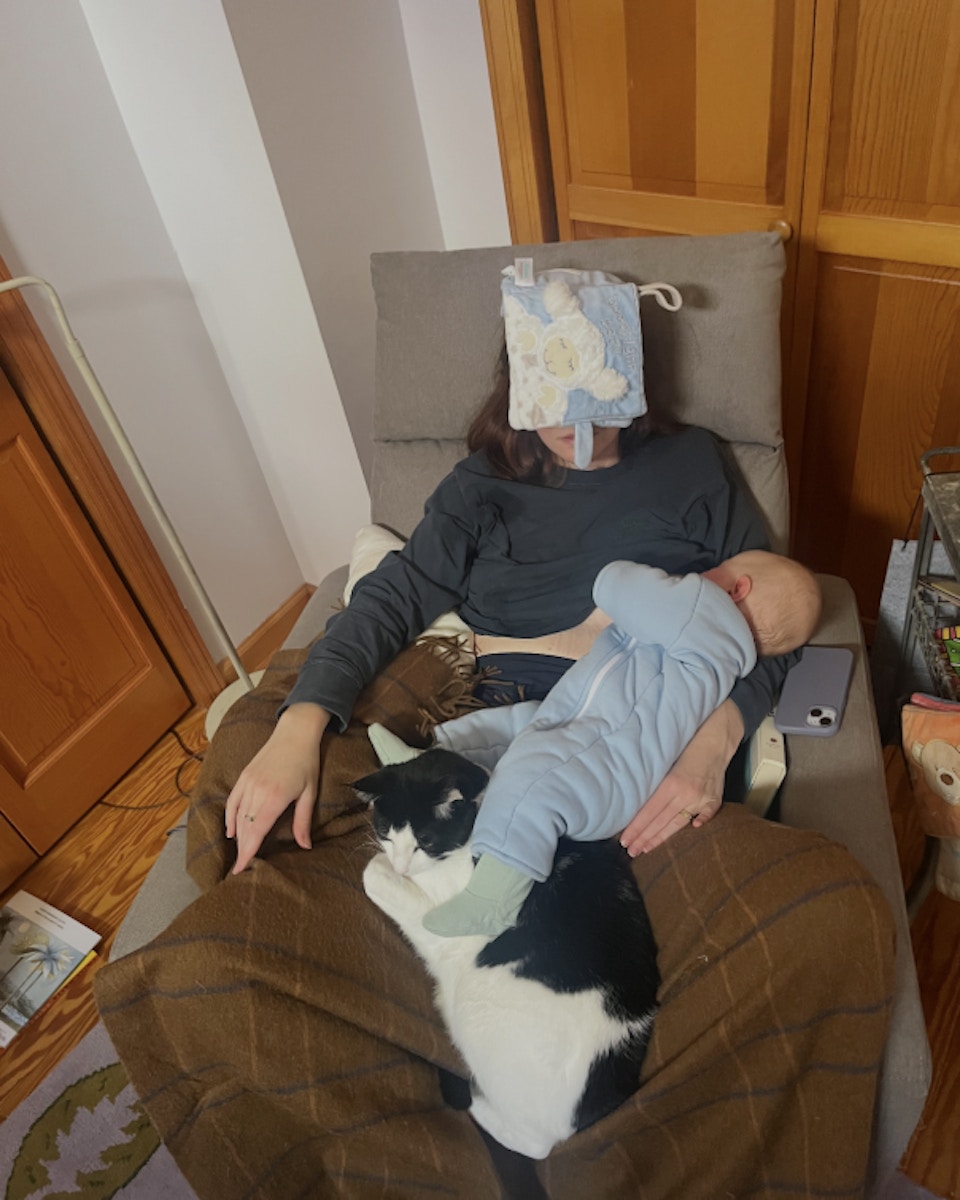
Early motherhood took on the texture of a psychedelic experience. Time bent. The familiar and mundane became at once wondrous in the presence of this new soul. Days and nights melted into a continuous stream of moments: peeling my baby’s sweaty head off my chest to find a perfect imprint of his perfect ear; my husband’s long body lit by the watery glow of a full moon as he slept on the nursery floor; razor nails pawing at my lips; warm milky breath mixing with mine as we drifted off to sleep.

There’s no instruction manual for how to build a life inside a structure that could crumble at any moment. No guide to tell you how to live there, despite the rickety foundation, and make a bed in the soot. No home magazine to advise on whether you should paint the nursery walls cracked by broken promises, or leave them unvarnished as a reminder of what lurks on the other side of the life beyond our wildest dreams, or my small and ordinary ones. No one to tell you what to do with the unwavering knowledge that your heart belongs nowhere else but in this painful and beautiful place, and that the pain and the beauty are not separate things but actually, inextricably, devastatingly, one. No one, really, but you to ask: what if it’s the wrong choice? What if someone gets hurt?
*
When I found my husband, he was crumpled on the floor of our bedroom like a discarded towel. It wasn’t the first time I had found him drunk since rehab, but it was the first time I had found him drunk since the birth of our son. His head rested heavy in his hands, his spirit soggy from a half liter of gin he had drank that morning.
We wept, but not together. His tears fell with shame and surrender. Mine burned with rage.
It was then that I told him. “I have a secret,” I spoke in a voice I didn’t recognize, shrieking and whispering at once. Words sharp as glass on my tongue.
“The plant – your plant – it’s fake.”
“Why?”
I couldn’t say.
*
I tell my therapist about the relapse and the plant, but mostly about the plant. “He really thought it was real. It does look nice, it was expensive. But what did he think? How would it survive?”
My therapist tells me other people are fundamentally unknowable and that I’m asking the wrong question. She asks, “What's the plant for you?”
*
There’s a version of this essay where I reference an academic article detailing the rise of plastic plants during Cold War anxieties. In that version, I tell you that, according to the article, artificial flowers provided a fiction of permanence and stability in a world that suddenly felt perilously fragile.
There’s a version of this essay where I cite the recovery literature and make the plant about the magical thinking that things can survive without daily care.
There’s a version of this essay where I ask my husband what he thinks the plant is about, and he says, “Maybe it’s not so complicated. Maybe you wanted one less thing to look after. Maybe I did too.”
There’s a version of this essay I never tried to publish, because I didn’t think it was my story to tell.

"There’s a version of this essay where I reference an academic article detailing the rise of plastic plants during Cold War anxieties. In that version, I tell you that, according to the article, artificial flowers provided a fiction of permanence and stability in a world that suddenly felt perilously fragile."

“IF NOTHING CHANGES, NOTHING CHANGES.”
This is what’s embossed on the metallic green coin I hold in my hand as I wait my turn. It is 8 a.m. on a foggy spring morning. My son is strapped to my chest. My husband makes his way around a small basement room of a white steepled church, gathering hugs and small envelopes with tokens of congratulations: a beaded bracelet he will wear until it snaps, a small origami crane.
We stand in the front of the room as the chair announces sober anniversaries. My husband has 90 days. The man standing to our right is dressed in tracksuit bottoms and a purple suede button down tucked in. He looks well above 6’ 4” and has deep and welcoming eyes. A faded inky tapestry stretches across his pocked skin, telling me what his words don’t need to – that it is no small miracle he stands here beside us. Today, he celebrates 35 years. His wife, a wiry woman with a metallic bronze face striped with tears, hands him a coin and they kiss like it’s their wedding day 40 years before. We clap and cry too.
It’s my turn to give my husband the coin. As I stretch out my hand, my son takes the coin and hands it to his father. We all gasp and then laugh. Someone says, “That’s God right there.”
I leave the meeting early. It's time for my son’s nap. As I step out into the wet morning, yellow and orange and white daffodils beam up from the damp mossy earth. I pick one from the flower bed by the church entrance. When I get home, I put it in a tall glass vase, and fill it with water. I stand on a chair and put it up on the shelf, next to the plastic plant. Our baby sleeps beneath.
Madeleine is a creative strategist and native New Yorker now living in the Hudson Valley with her husband, their son, Otis, and two cats, Suki and Oscar.