Inside Argent's Talking Circle at Gloria Steinem's Townhouse
Words by Emily Barasch
Amongst the many things we learned on Thursday afternoon was that Gloria Steinem loved a diner. One of her favorite haunts was EJ’s Luncheonette—an Upper East Side institution known for its exquisite open-faced, 20 dollar tuna melt. She liked any place where people gathered and shared ideas; where minds could meld and movements be formed. In other words, her own Talking Circles may have been inspired by indigenous wisdom and the time she spent in India, but she was down for a communal, greasy spoon too.
These personal tidbits—she also visited a jazz bar down the street for decades and adored the vegetarian haunt Candle Cafe; she was a woman containing multitudes!—and remembrances of the feminist icon were shared aplenty when Argent hosted an intimate gathering at her townhouse in the thick of Fashion Week.


But let’s rewind for a moment. A month ago, Argent generously invited us to a legendary Talking Circle to be held with Gloria and co-hosted by Argent’s own founder Sali Christensen. Each of Gloria’s Talking Circles has a theme, and this one was meant to cover leadership and style. “Our conversation will focus on how the conscious fashion choices we make every day shape—and are shaped by the industry we work in,” the invitation read, “how fashion is a tool for confidence, and how we model leadership for a more inclusive, welcoming future for the next generation.” This made total sense; though we can and should focus on Gloria’s intellectual historical legacy of action, she was also a sartorial legend—a fashion plate who created trends and actually, uncannily, always looked fantastic.
But a week before the event was meant to take place, Gloria passed away. (The writer, activist, and icon died peacefully at age 93 on September 2nd.) We’d all assumed the event would get cancelled. But no, Gloria’s Foundation told Sali: Not only will your show go on, but the rest of them, in perpetuity, will as well. As in Gloria’s final wish was that her townhouse remain open for Talking Circles and events long after she parted the earth she did so much to help change.
As Gloria said in the Netflix series, Famous Last Words: Gloria Steinem: “[P]lease tell your own story. This is the most important thing we can do for each other—to know each other through stories. And I hope so much that whoever you are, listening right now, you are able to do what you love — [and] to be, also, the unique person you are.”
So with full hearts, a lot of curiosity, and truthfully some nerves, we went. (Once we all started chatting, it was clear at the beginning of the event that many of us felt anxious and even emotionally overwhelmed just being there given the circumstances.)
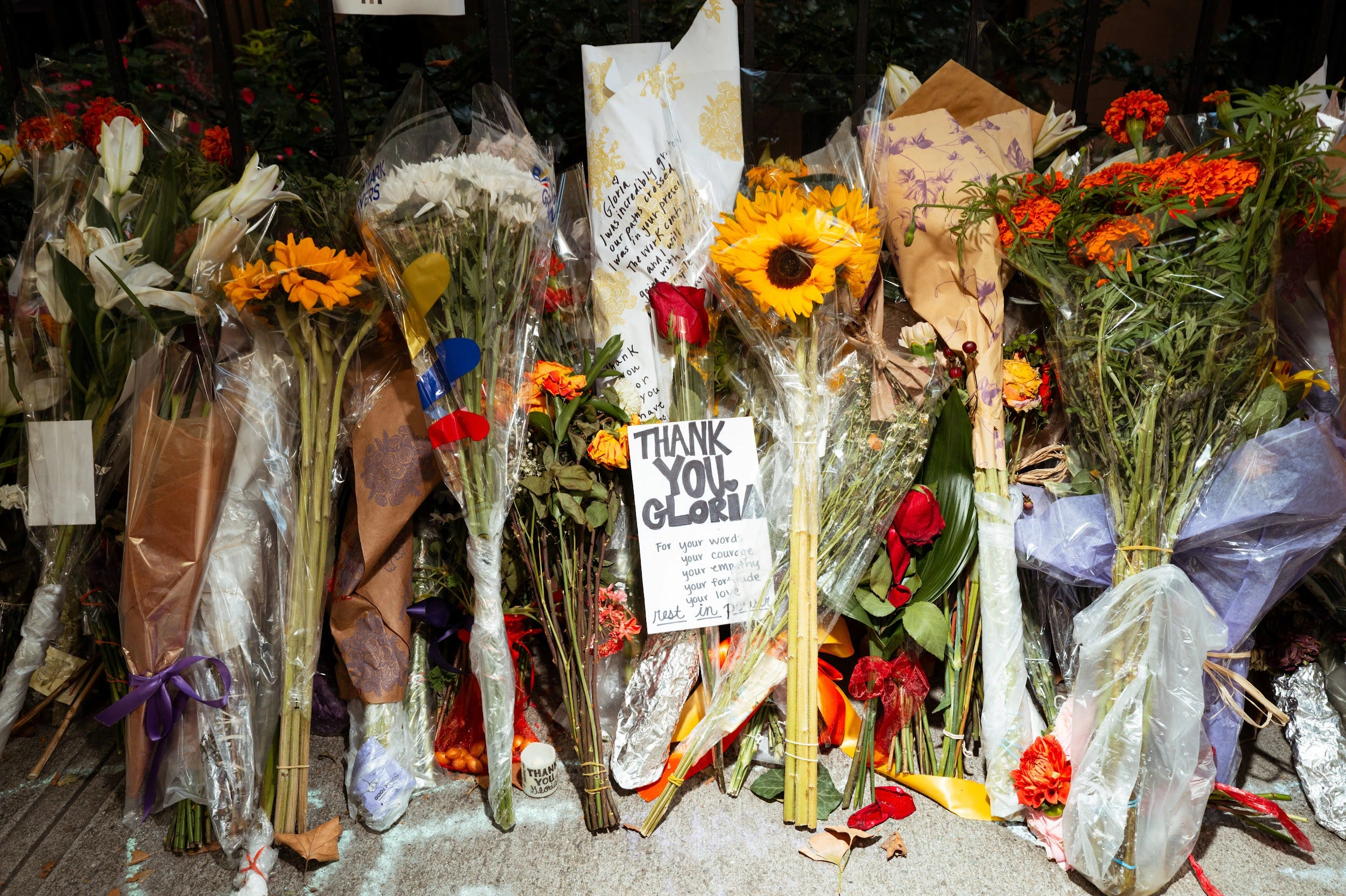
Our taxi dropped us off outside the classically-uptown brownstone. There were bouquets of flowers, written letters, Smith College banners, aviators, and even (and of course) bras left in homage outside the door. A school-aged girl dressed in uniform stopped by with her mother. Two teens selfie’ed. Young people will know Gloria, we thought as we walked inside.



"This is the most important thing we can do for each other—to know each other through stories."
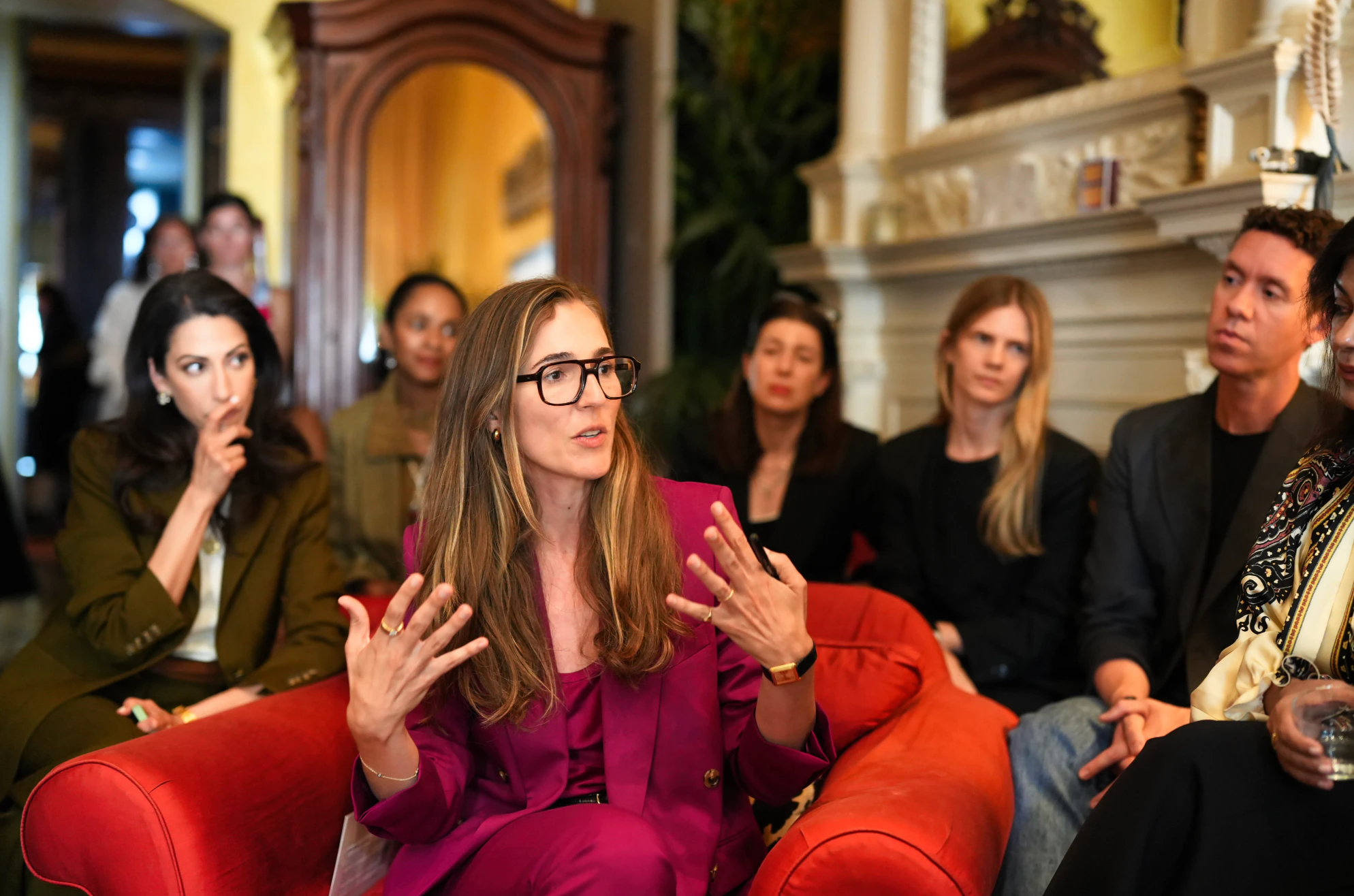
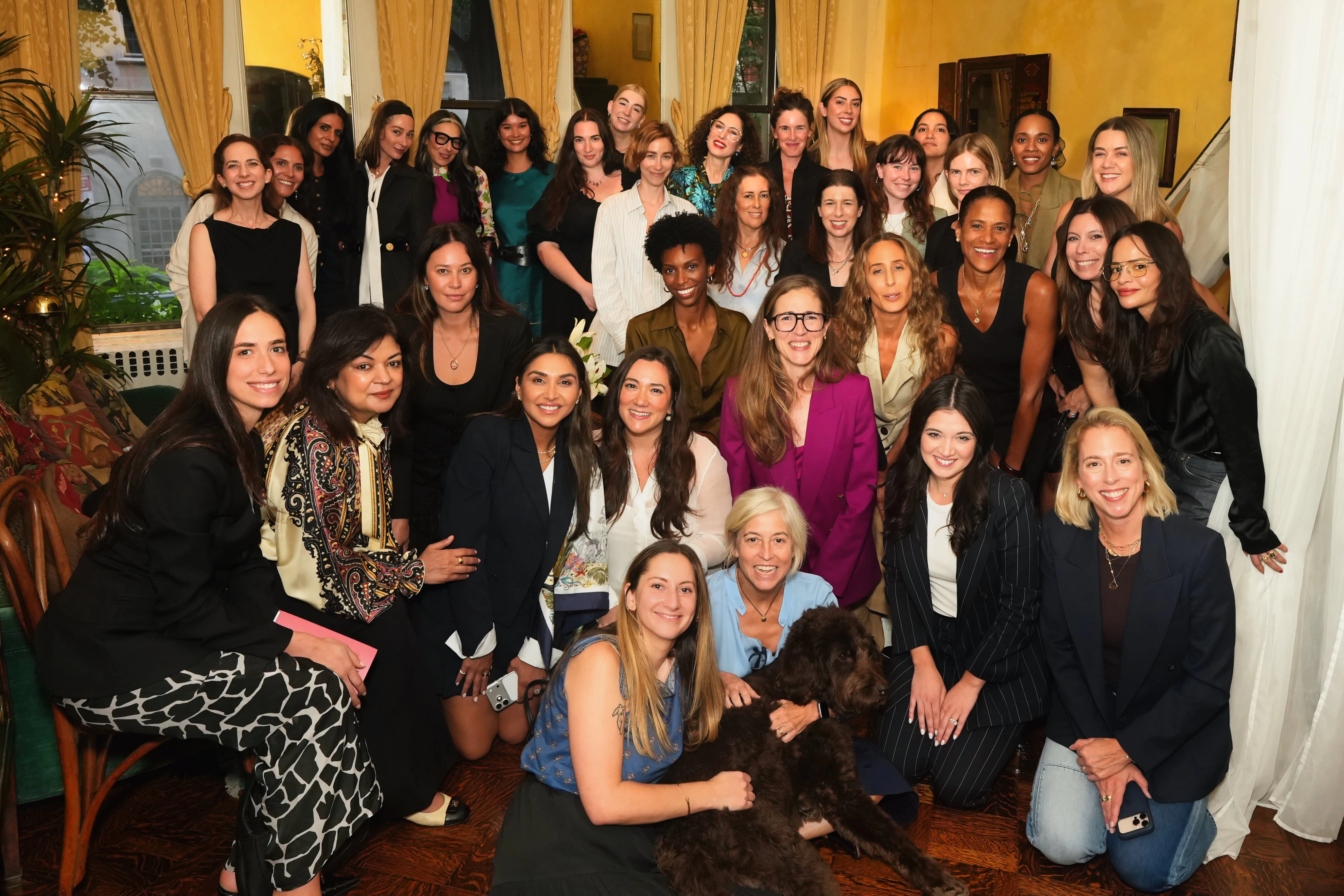
In attendance of course was Sali and her chicest Argent gang: Alex DiCapo Patel (of the best best fame) and Gina Marinelli. Also present: Huma Abedin, Mara Hoffman, Stacy London, Clare Vivier, Bess Kalb, Dolly Meckler, Ashley Moubayed, and Kerry Docherty. Amy Richards, herself a renowned activist, T.V. producer, academic, and writer, but also Gloria’s righthand (wo)man and “surrogate daughter,” as she was described, was there too. Amy provided us with the most intimate recollections of Gloria and what her intentions were around continuing the Talking Circles.
Being in Gloria’s space and surrounded by her things, accumulated over her long and storied life, was arresting. Her collection of books, art, photographs, knicknacks, and matchbooks all required inspecting. Sali sat in Gloria’s chair: a cherry-red loveseat with the leopard pillow, as if furniture could personify their owner.
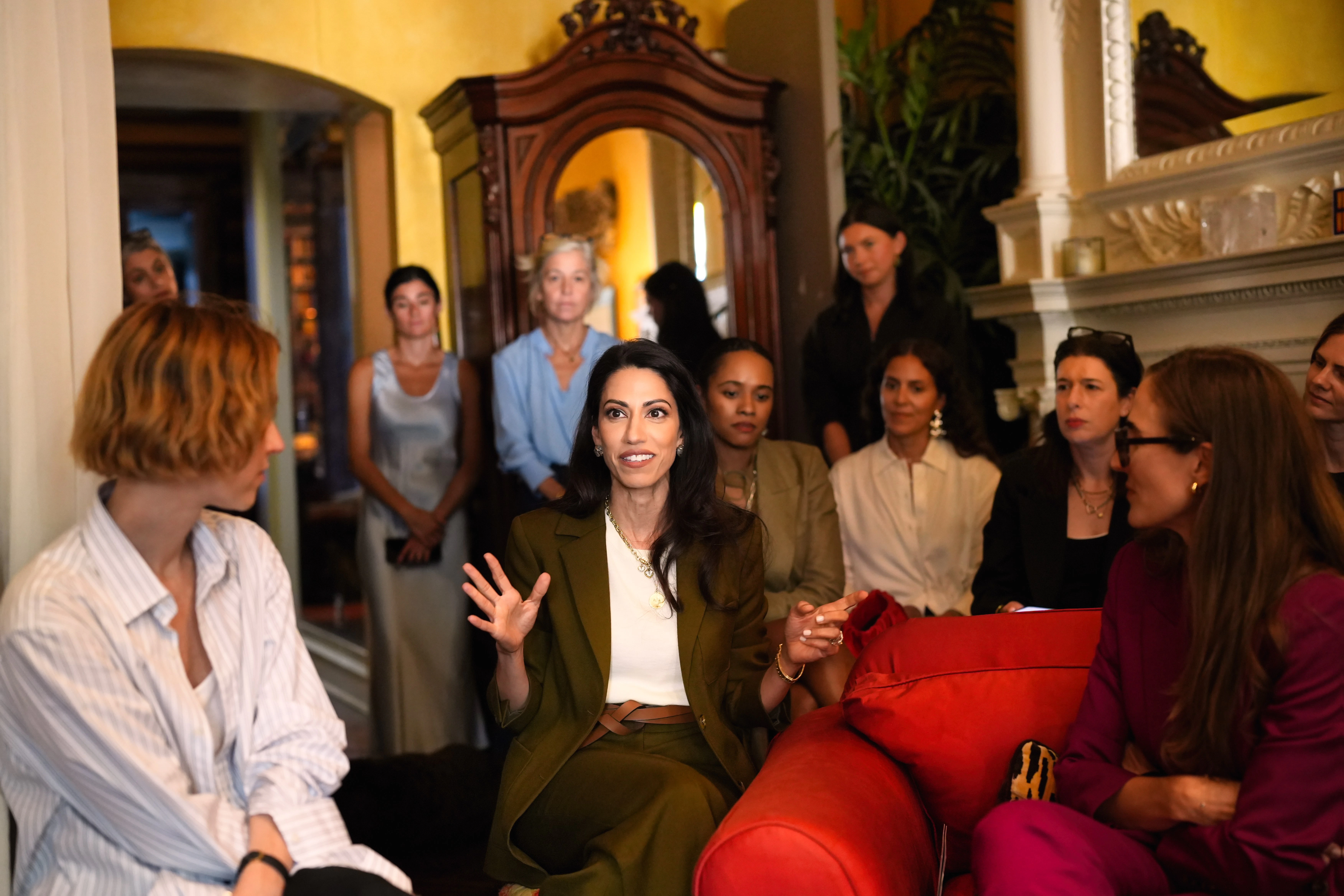
Since the timing was still so fresh and the atmosphere tender, the theme morphed away from fashion into sharing general memories of Gloria, personal and global. Huma (no last name needed, tbh) began the conversation, sharing with us what it was like seeking Gloria’s counsel during a time of intense public scrutiny on her personal life. “Gloria had this incredible capacity to listen to other perspectives and ideas and acceptance, and I think that currency today is more valuable than ever,” Huma shared. “She taught us that there wasn’t one way or a right way as a woman—no best job or to have a baby or not. The right way was the way that was right for you.”
We all hung onto fashion legend Mara Hoffman’s every word, when she veered us back to the original topic, describing “fashion as legitimate and not frivolous kind of expression, but something communal that you can translate into activism. I would stand behind a woman as she looked at herself in the mirror. I was allowed to feel her vulnerability, her insecurity of that moment or empowerment or confidence, and watch the transformation.”
Then Spread the Jelly (aka us) spoke about how even though Gloria didn’t physically mother children, she mothered and mentored us all. She made the world an easier place to be a mother and be other things at the same time. On that note, a young designer shared how a recent cancer diagnosis rendered her infertile—she talked about Gloria being an inspiration in walking through what was happening to her.
Stacy London, the stylist and host of What Not to Wear, mused how Gloria's acknowledgement of her “pretty privilege” opened doors for her as an activist which lead to larger conversation around beauty and its role in her iconography. Dolly Meckler spoke about studying gender in college and seeing everything through the lens of feminism—Gloria’s lens. The writer Bess Kalb recalled her grandmother, who was a civil rights activist and how she was inspired by Gloria. Did we mention the whole room was crying?
It’s hard not to get emotional when you consider a legacy like that and what was shared that day in that room. As Gloria said, “Empathy is the most radical of human emotions.” Additionally, her life and work influenced STJ before we had a name for what we were building. Her fingerprints are all over the early iterations of our manifesto and visual references and eventually physical copies of our personal Ms. magazines were some of the first pieces in our Motherhood Archive.


Gloria encouraged us as mothers, to own our own stories—unapologetically, without asking permission. She understood that change didn’t come from one singular voice but from making sure different voices and varied perspective in the room got heard. Spread The Jelly exists because women like her made it possible for women like us to have a voice, a platform, and a community.
Thank you, Gloria. For your warmth and generosity, even in your passing. For opening your home to us. For asking better questions than we knew to bring and for proving that the work is never finished—and is still worth doing.
Thank you to our dear friends at Argent alongside Gloria’s Foundation who welcomed us despite their loss. We’ll keep the conversation going.