Before I Grab My Son, I Step on the Scale
Words by Jayme Cyk
Working in beauty and wellness doesn’t exempt you from hating your body, trust me, I learned that the hard way. I’ve been on Weight Watchers for around three years, minus a break during my pregnancy. The irony isn’t lost on me: After trying what feels like every diet and “healthy eating” program out there, it was Weight Watchers that finally gave me a sense of direction. After decades of feeling disconnected from my body and struggling with an eating disorder, it was the first time I actually started to feel better about myself.
About six months into my Weight Watchers journey, my husband and I decided to try for a baby without any real sense of how long it might take. I want to acknowledge that many women face fertility challenges, and I don’t take that lightly. But the month after I had my IUD removed, I was pregnant.
My first immediate thought, the only one I remember having was: My body can’t change yet. It was a jarring emotional shift; one moment, we were casually talking about a baby, and the next, all I could think about was losing control of my body again. I had just started losing weight. My disordered-eating brain didn’t feel the excitement or the fear of becoming a mother, only the fear that I might never see my body become what I’d hoped it could be.
The anxiety came rushing through my body. My thoughts fragmented. It wasn’t quite panic; it was quieter, more insidious. Like my body was leaning forward, bracing for impact that might never come.

"One moment, we were casually talking about a baby, and the next, all I could think about was losing control of my body again. My disordered-eating brain didn’t feel the excitement or the fear of becoming a mother, only the fear that I might never see my body become what I’d hoped it could be."
During the first trimester, I couldn’t see past the changes happening in my body. I didn’t realize that constant nausea could quietly hollow me out, leaving me depressed as much as depleted. Even though I felt sick most of the day, some part of me clung to my workouts as a last thread of control. I told myself it was for my mental health, and in some ways, it was, but the truth ran deeper. It was still rooted in my eating disorder.
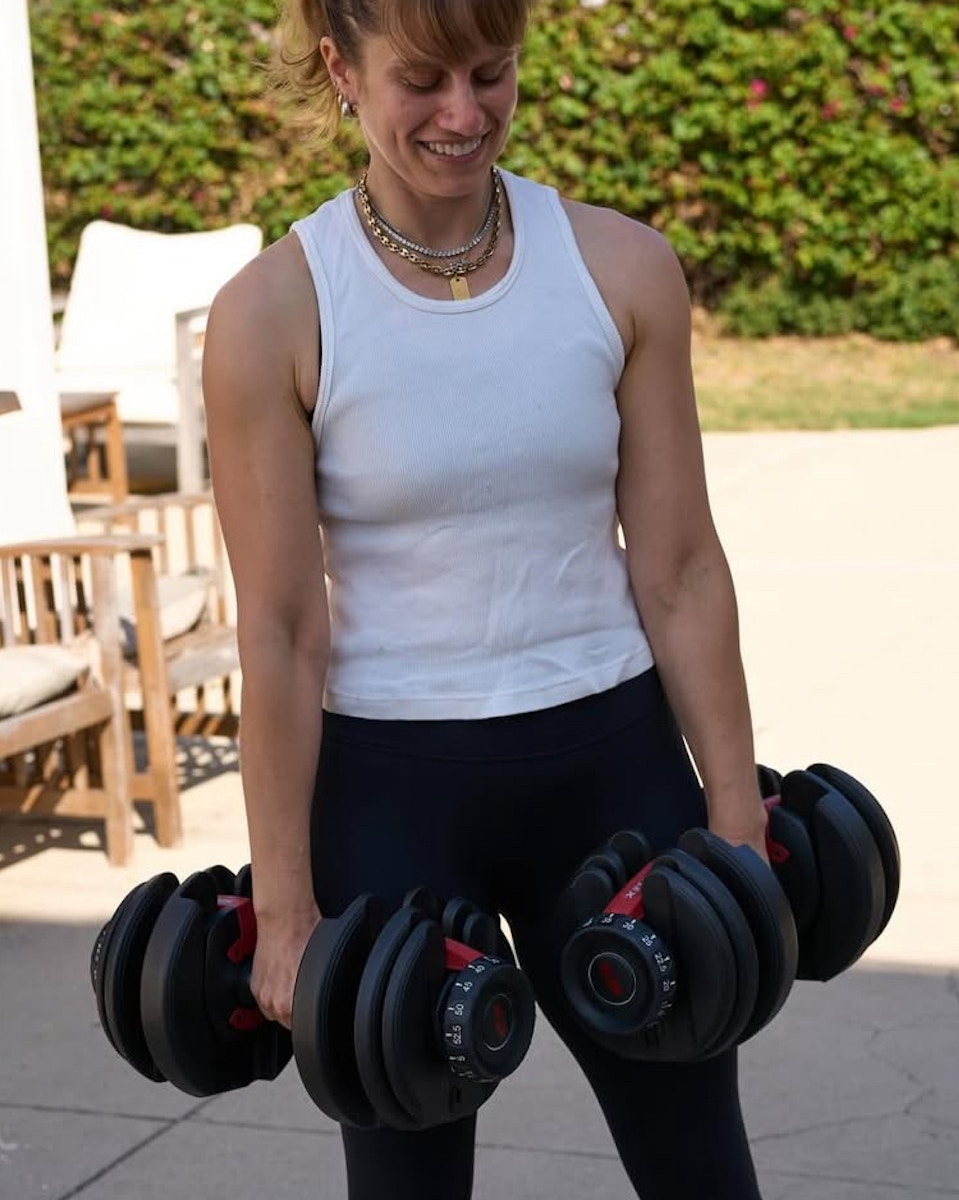
I stand by my decision to strength train throughout my pregnancy, but I also know I pushed too hard, especially in the beginning and again toward the end. That became undeniable around 36 weeks, when I threw my back out. I was deadlifting with two 20-pound weights, too heavy for my very pregnant body. I bent down, came back up, and felt my lower back shift, followed by a sharp pull. It felt like yanking a jammed CD out of a CD player. I slowly straightened and immediately understood what I’d done.
Every movement suddenly felt fragile and punishing. The pain sent me somewhere dark. I was terrified I wouldn’t be able to physically push my baby out, that my body had failed at the moment it mattered most. I healed before he arrived, thankfully. But the experience stayed with me. It was a stark lesson in needing to restrain, listen, and finally allow myself some leeway.


Just as my body‑image issues complicated the fantasy of being excited about getting pregnant, having my son brought a new wave of fear about how my body would change in an instant. That immediate, cinematic bond so many women describe, the moment you see and hold your baby for the first time, didn’t land for me. I was overwhelmed. About an hour later, I looked in the mirror for the first time, and the familiar noise in my head, the voice that’s always told me I’m not enough, came rushing back faster than I expected.
I knew, at least intellectually, that your body still looks pregnant right after giving birth, but knowing something and seeing yourself in that state are two entirely different experiences. I was swollen to the point of edema and didn’t recognize myself. At that moment, I felt like a failure. I worried that one day my son, and even I, wouldn’t want to reminisce over photos because I looked like an embarrassment. I know now it was a temporary spiral, but when you’ve spent years wrestling with your body and trying to force it into a version you can tolerate, this felt like the deepest betrayal of all. And the well‑meaning women who kept saying your body was meant to do this or it’s all temporary only made me angrier. And for the next two weeks after having my son, nothing anyone said could pull me out of the hatred I felt toward myself.
"I was swollen to the point of edema and didn’t recognize myself. At that moment, I felt like a failure. I worried that one day my son, and even I, wouldn’t want to reminisce over photos because I looked like an embarrassment."

I live in Los Angeles, where the pressure to look a certain way can feel relentless. It’s a city where thinness is equated with discipline, and a postpartum body is often framed as a project rather than a miracle. Even while pregnant, scrolling through Instagram felt like a test: Every influencer seemed to bounce back instantly, feeding my insecurities before my own body had a chance to heal.
With the rise of GLP-1s, it feels like we’ve come full circle, and not in a good way. Thin is still treated as the only ideal. So much so that wellness brands are now marketing GLP-1-like supplements, ingestibles that claim to be a “natural” replacement for weight loss medication, as safe while breastfeeding. That claim may be technically true, but it stands in stark contrast to how we should honor our bodies when they’re working overtime to nourish a newborn.
I’ve never used a GLP-1, but I recently watched Brooks Nader, the naturally thin model and star of Love Thy Nader, open up about how she abused the drug. Until then, the idea of overusing a GLP-1 had never crossed my mind. Had I not lost weight quickly after my body gradually recovered from pregnancy and its extreme swelling, it might have been something I considered. Thinking about it now, I realize Brooks could have been me, juggling multiple injections, unsure when “enough” weight loss would ever feel like enough.

"L.A. is a city where thinness is equated with discipline, and a postpartum body is often framed as a project rather than a miracle. Even while pregnant, scrolling through Instagram felt like a test: Every influencer seemed to bounce back instantly, feeding my insecurities before my own body had a chance to heal."
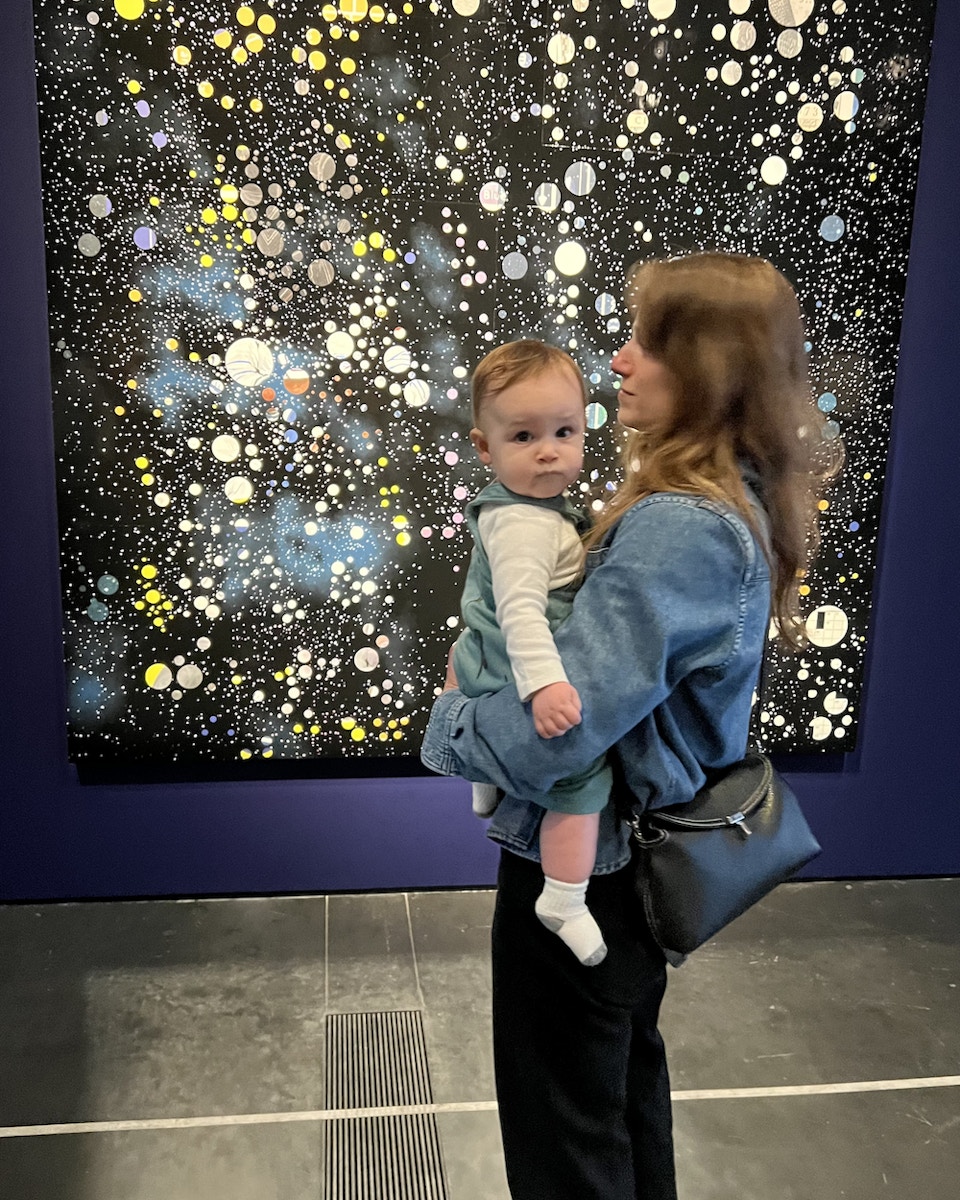
But I don’t need a GLP-1 to find myself uncertain about when my weight loss is “enough.” I’m in that same predicament now, just without the medication. By the end of breastfeeding, I had reached a very low weight, perhaps even lower than when I was 17. Two months after I weaned, some of the weight returned and settled at a stubborn, unmoving number on the scale. It made me anxious, not only because I wasn’t losing, but because I was determined not to gain any more. I kept reminding myself, and still do, that my initial weight loss wasn’t sustainable, and that it’s okay.
But the truth is this: I weigh myself every day, hoping the number will drop. Every morning, I check the Nanit, hoping I have enough time to brush my teeth and weigh myself before grabbing my son from his crib. I look in the mirror and check my face for puffiness to see if it indicates anything I’m about to see on the scale. My mom once told me never to eat or drink before weighing myself, and that rule is still lodged in my brain. So I step onto the scale, peel off my sweatpants, stand there in just a T-shirt, fingers crossed, hoping it’s less than yesterday. It has stayed steady, yet I still find myself wishing that when I wake up, the scale will tell me something different.
So where am I now? I’m probably in the best shape I’ve ever been, and I’m proud of that. But I’m human, and part of me still fixates on that lowest weight, even though I know it wasn’t healthy. More than anything, I want energy for my son, and I don’t want him to witness my fraught relationship with my body. Thankfully, it’s better than ever, but there are things he should never have to see or understand. And that’s why I’m learning to measure my worth not in pounds, but in presence, patience, and the love I show him every day.
Jayme Cyk is the co-founder of And Repeat, a line of supplements and accessories to support mental clarity in a world built to distract you. It’s a brand born from her experience of getting off ADHD medication after a decade (though it’s not just for those with ADHD) and exists to make mental clarity feel possible.
With a career spanning almost 15 years as a beauty and wellness editor, Jayme has honed her expertise in editorial and copywriting to help brands amplify their voice. Her work has been featured in publications such as WWD, Vogue.com, and Forbes Vetted, and she has collaborated with retailers including Violet Grey and The RealReal, bringing a sharp, discerning eye to every project.
When she’s not working on And Repeat and helping beauty and wellness brand on editorial strategy, Jayme writes I’m On An Antidepressant, a Substack about beauty, mental health, and the slow work of liking yourself.