Getting Sticky with Tefi and MJ
Life forces, consummate personalities, rays of light like multihyphenate Tefi—né Estefania Pessoa, you know her from her viral Ask Tefi column for New York magazine, her own podcast, Tefi Talks, and Aftersun on Love Island (!!!)—don’t just appear out of nowhere. They come from an architecture of strong women, cultural ties, and tight-knit communities that form them into the one-of-a-kind energies people just respond to.
In Tefi’s case, it’s her mother, Maria Jose Pessoa (who goes by MJ) who has modeled self-sufficiency, unrelenting drive, and iron-clad will for her daughter since day one. MJ came to the U.S. from Colombia, established herself as a formidable business woman, and raised three kids as a working, single mom.
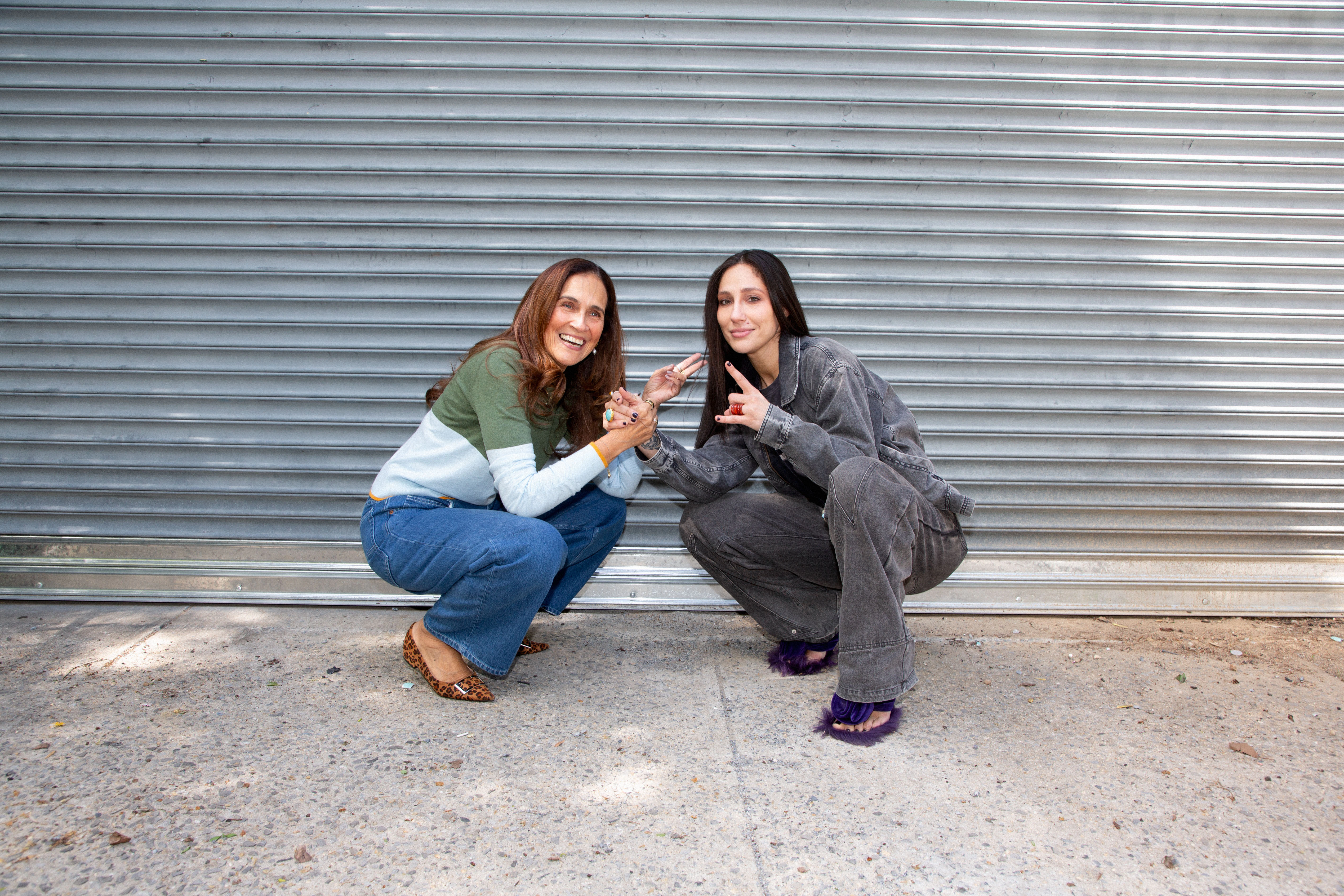
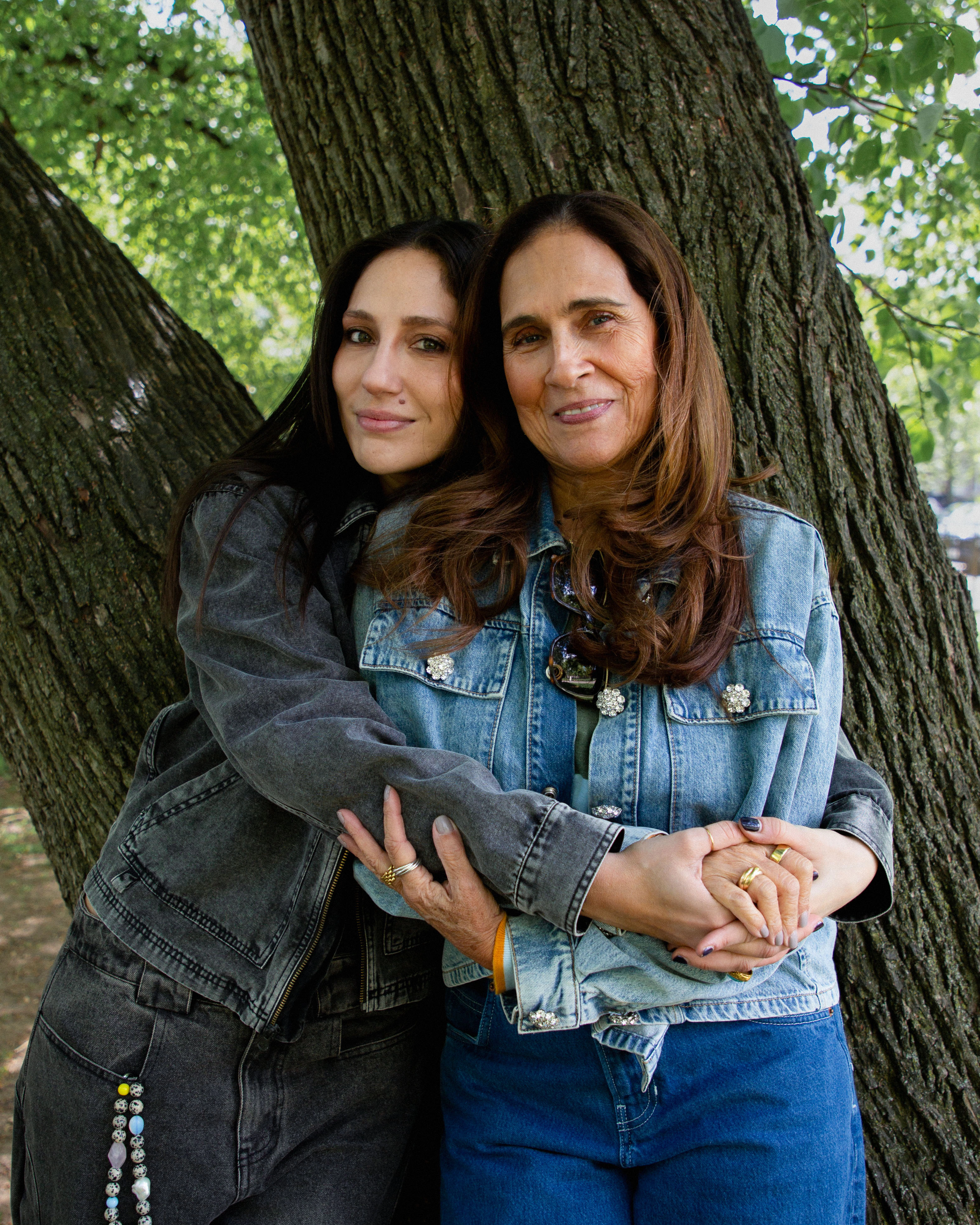
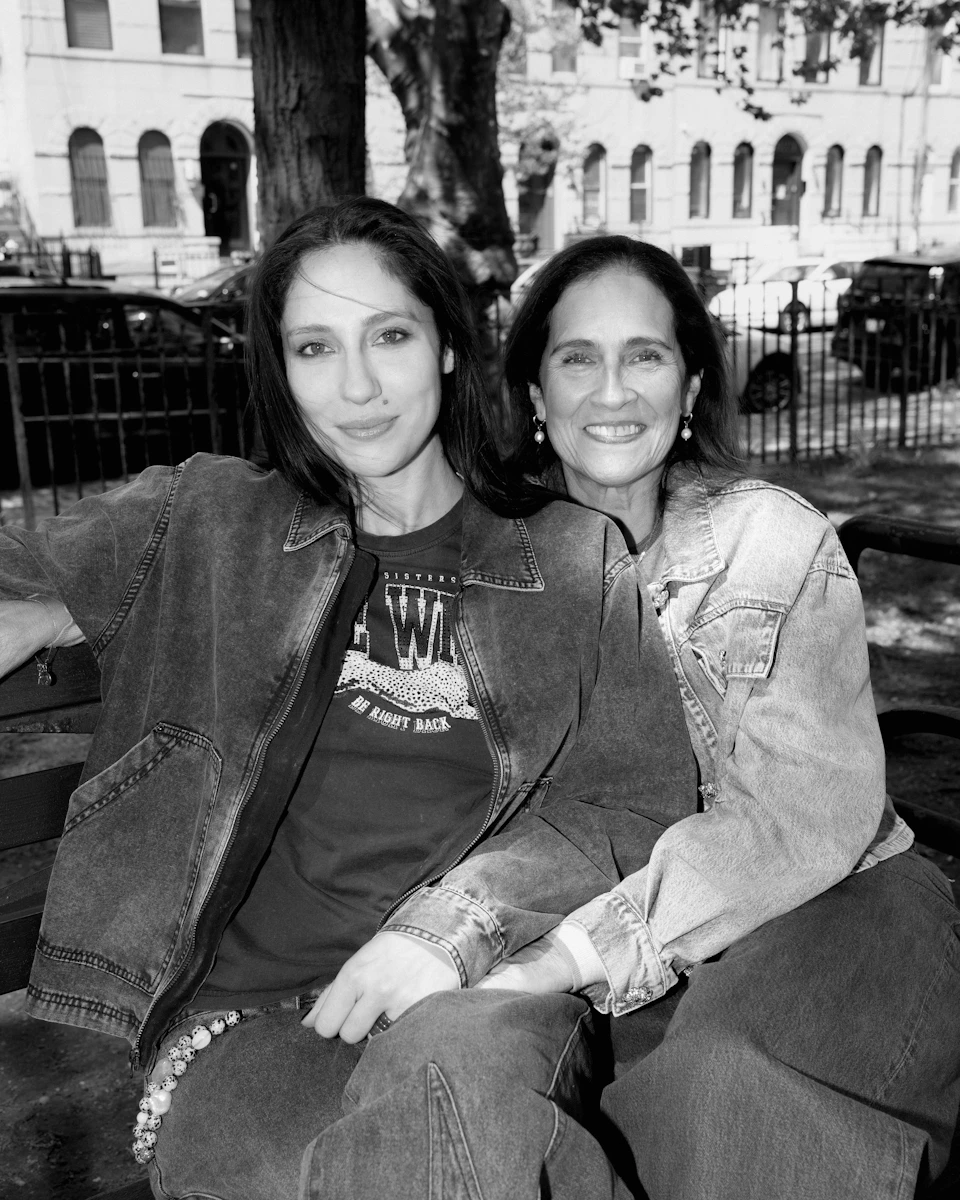
We had the privilege of interviewing both Tefi and MJ, but in true Tefi-style, she ended up being the one to ask the most questions. Where Tefi was half jokes and half incisive cultural commentary, MJ exuded quiet strength and deep pride in her daughter’s wild success. Below, the unsurprisingly iconic duo spoke about their Colombian ties and raising kids/growing up in the melting pot that is Miami; what Tefi learned from MJ’s ambition; and intergenerational childrearing.
Words by Emily Barasch. Images by Tommy Rizzoli.


"I've never ever ever ever ever been asked, 'When am I getting married? When am I having kids?' My grandparents and my mom would ask me, 'When are you going to ask for a promotion?'"

Latinx Population: 2
Tefi: [Being from Colombia,] you were the only Latin person in your college when you went.
MJ: So my sister went to school in Maine and I went to school in Maryland. We picked the smallest college we could find because we were terrified of 20,000, 30,000, 40,000 students. And lo and behold I got to college and I was the only Latin person there.
Tefi: The only other Latin person was Puerto Rican and his brother would smuggle in weed in his sneakers. So my mom would be like, "We're the only f*cking Latin people here." He was so nice, but he was always so high. But my mom's like, "You and I are representing a continent."
“Oh my god. [Tefi] would be dead.”
MJ: I hear Tefi sometimes say when she was in Miami she never felt like she came like different because there's so many nationalities and in school, there's people from Central America, Europe, Asia, wherever. [Personally, in Miami] I didn't feel that I was an immigrant, I would forget. That's unless somebody asked me, "Oh, where are you from?" because of my accent or a comment I made like, "Oh, Colombia." I mean, proudly so. I love Colombia.
Tefi: We grew up in a bubble. I had so much family around and some of my other friends were Bolivian and Venezuelan. The only people that I felt weird around were those who had generations in this country, who were very pretty Americanized. They wouldn't get up to say hello to you or their kids would curse in the house.
M.J.: She'd come home and be like I can't believe how Bobby speaks to his mother.
Tefi: I'm like Bobby called his mom a b*tch. I think Bobby's going to die.
M.J.: Oh my god. She would be dead.
Tefi: I would be dead. I do feel very lucky though that my perspective when it comes to work and dating, love and life, is probably very similar to my grandparents. Traditional. I'm a pretty traditional person even though I have a tattooed woman stabbing herself in the head on my arm. I have 305 on my neck. But I feel very very fortunate that my family doesn't have immigrant stories that are horrible. My mother came on a plane. We hear all these horrible stories about families being torn apart, but that wasn’t us.
Nothing can prepare you
MJ: You think you're ready, but you're not. I didn't read a lot of books. I read only one book. My best friend had just had a baby. Her and Tefi are like cousins. We had the same midwife. From her, I had an idea of what it was going to be like when I had the baby.
Tefi: Was it what you expected? You had all three of us naturally.
MJ: Yes. First of all, I wanted to go home from the hospital immediately. Some people want to stay in the hospital because they're scared to go home. I wanted to go immediately, but I think a lot had to do with my own mom coming to stay. We invited her to come and stay, which I see today that that's not what a lot of couples want to do and I respect it. But I think we trusted my mom that she was going to do what we asked and she wasn't going to be difficult and she was going to be a team player.
Tefi: Yeah. 100 percent.
MJ: I remember the first time the milk finally came down. I was nursing her and she let go and the milk squirted into her eye. I was in the bedroom and I was like, "Mom, mom, I killed the baby." So it was a lot. Or they tell you the belly button cannot get wet. But you try and bathe them without getting the belly button wet. [Thankfully] my mom was there to steady me, as if to say it's going to be okay.
It's weird to look at this baby and know they were in your belly, two, three days ago and now they're your full responsibility. Having my mom helped me a lot but obviously then they leave. Nothing prepares you for the lack of sleep. It was wonderful, but it gives you a lot of anxiety because this baby needs you 100 percent of the time. And when I had my kids, you had to be back at work at six weeks postpartum.
The village is everything
Tefi: Did you ever lose your sense of self?
MJ: I became a mom and I loved my job. My mom still lived very close by.
Tefi: Yeah, my grandparents were two minutes away my whole life. We're very very blessed that way.
MJ: I would miss the baby but I could call my mom and I nursed for six months exclusively. So I would go home for lunch and obviously leave milk for my mom. I just tried to do everything. So I never really felt lost. No, it was always me and as a mom, it became another part of me, but I didn't feel disconnected at all. I feel that I was very lucky.
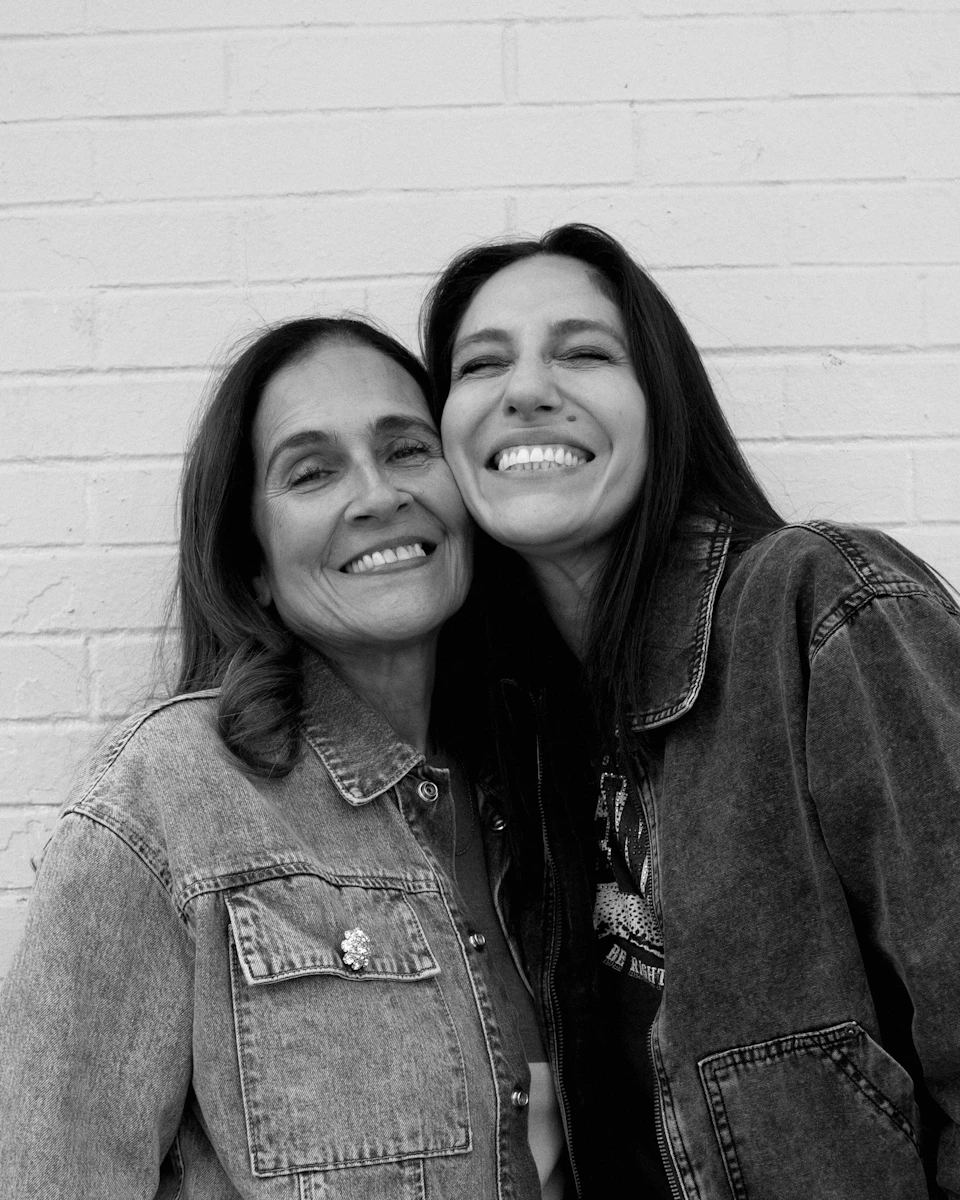
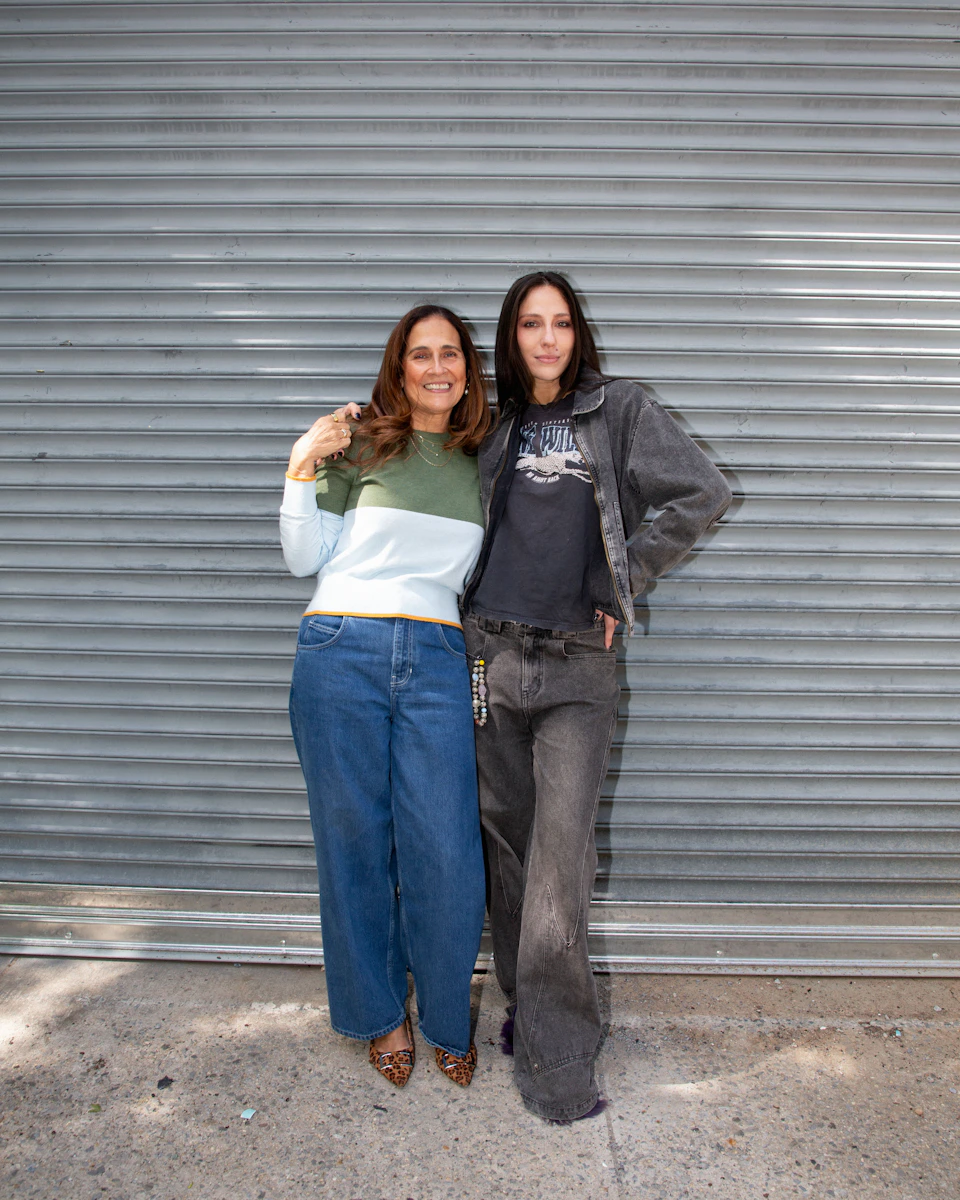
Tefi: She also was very good at carving out time for herself. Even though we were in the house together, my brother, my sister and I, there was a time that was “Mom's Time,” that it would either be a workout tape or she would pick a movie for us. She's always, always worked. I couldn't really understand a stay-at-home mom. I think I knew one growing up. My mom has a group of like I'm not exaggerating like 25 people she grew up with that she is still friends with today that met her in kindergarten. She's always had a community and a village that also would defend her when I was being a bratty teenager. They'd be like: don't you ever disrespect your mother like that. That's my best friend.
We repeat, the village is everything
Tefi: I'm also the person that when you date me, I have around 25 people to introduce to you to that I also grew up with. I've always had a village. I've never been isolated. My mom being busy is the greatest gift she could have ever given me. When my parents split up too, she was really able to make her dreams come true and work really, really hard. And then she got it. I got to see from the front row that if you work really hard, you can live the life that you want and you don't have to sacrifice your social life, support system, or sanity. If you just take it step by step and you will get there. There is an embedded work ethic from my family at least. It's very odd that I hear anybody in my family bring up marriage or kids or anything like that. And then it took her like 10 years or something. So I also have that turtle versus the hare mentality too.

"My mom doesn't provide judgment. She provides a wisdom that I don't have access to."
When the stereotypical shoe doesn’t fit
Tefi: There's always this stereotype of a Latin family or an immigrant family where they go to Thanksgiving. And everyone asks, "Where's the boyfriend?" I've never ever ever ever ever been asked, "When am I getting married? When am I having kids?" My grandparents and my mom would ask me, "When are you going to ask for a promotion? When are you going to ask for a raise?" It's because they really wanted me to become self-sufficient, but they would always help me. If I needed help with my car insurance or gas. It wasn't like you're on your own. Their dream for me was not to be a doctor, an engineer, or a lawyer. It was to be self-sufficient, to live life on my own terms.
I internalized it when I would go to these kids' houses and their moms or grandmas would make comments about their bodies and stuff. I never ever had that. I felt very supported. I also felt I had to focus and had pressure to be the best at everything, but as soon as you get older, I think you also realize, oh, my family just wants me to be okay.
The varied references that form us…
Tefi: I was very invested in my mom's interests in music and TV shows. Immigrant kids today, Latin kids, they have Karol G and Bad Bunny. Whereas when I was growing up, my cousins were listening to 50 Cent and Eminem. There weren’t really crossover artists until Shakira. Talia, a little bit. Juanes, too. But truly mainstream, it would have been Laundry Service by Shakira.
MJ: My first vinyl in the seventies was Carole King’s Tapestry. I loved The Mamas and the Papas.
Tefi: When I would tell people my mom's music tastes or movies, they'd go, "Oh my god." I'd be like, "Wait, that must be good." I would try to listen and invest in that as well. At the same time, the hardest thing was my mom watching us probably be more Americanized.
MJ: I didn't mind it because we were already, to a degree. To a degree. But it was important to me that we don't lose ourselves.
Tefi: I think as a kid I thought I had to choose [between cultures.] During Y2K everyone was obsessed with the blond skinny white rich girl who was mean, like you had to be a Paris Hilton and an Olsen twin with the Jessica Rabbit body kind of deal. I think that was something that I really struggled with because if I reject it, if I start to lean more into Americans or the American teenager, I do leave loved ones behind and a community that won't relate to me. But it's trendy. “Mom, I want to wear Hollister,.” “I want to wear UGGs.” UGGs in Miami is athlete’s foot central. I want to be in Laguna Beach, but then I come home and I'm not. The only “real” American experience I ever saw was on television. People having basement parties. I grew up at sea level, there’s no basements in Miami.

On being political online
MJ: I think all my kids can say I respect very much how they feel, what they say. I don't worry and support Tefi. I have no issue with it.
Tefi: We're not women who keep our thoughts to ourselves. I get that question all the time, too: You're so vocal. What does your family think? I'm like, we have never been able to hide how we feel about anything.
MJ: We don't always agree. Not for nothing, I dye my roots. Experience counts. It does. And sometimes we talk about not just that issue, other issues and we talk. The great thing is we have a dialogue and at the end of the conversation, we usually agree.
Tefi: I think that my mom comes from a country that has a long complex history and sometimes I tell myself I know better than her and then I have to remember that my mom was there.
The best advice comes from lived experience
Tefi: My advice column [Ask Tefi] was a surprise because I'm the oldest of three and no one's ever asked me for advice ever. One time I asked my sister, "Why did you never ask me for advice?" She goes, "I would just watch what you did." Um, thank you, Laura. Then, I never ever thought that anybody would ever care about my opinion. I will say I have lived a lot of life and I always tell people I'm not the person that says don't go to that buffet over there. It looks weird. I go: Hey guys, I'm live from the hospital. That buffet is no good. Don't go. So every time somebody asks me about friendships or breakups, a lot of the advice that I give is my mom’s, grandma’s, and my grandfather’s. My grandfather told me once that the way somebody acts in the beginning is their best behavior. And if that's their best behavior, imagine a year from now.
Being wrong is my least favorite thing—you can ask anybody I've ever dated. But my mom doesn't provide judgment. She provides a wisdom that I don't have access to. I'm able to ask her questions like: is this right or is this wrong? And then and sometimes I'll fact check her and she's still right. It's so annoying.