
Getting Sticky with Elsa Marie Collins
If anyone ever asks me what I want to be when I grow up again—they probably won’t because I’m a full-fledged adult—the answer will be easy: Elsa Marie Collins. Mother of three teenagers, voting rights advocate, and overall just badass, when it comes to being at the forefront of issues we care most about, on Election Day and every day, Elsa is right there. (She also founded This is About Humanity, an organization that supports separated and reunified families at the border.)
Fighting the good fight—advancing immigration rights and advocating for minority voters while packing three lunches for three whole humans. She shares with us some simple rules for life: give back, even and especially when you don’t have much; fill your own cup and exercise can cure all; and nurturing self-sufficiency is the parenting goal—e.g. buy your kids their own suitcases and let them lug them around.
Below she talks about the hardest part of parenting toddlers (hint it involves biting) and the hardest part of parenting teenagers (hint it involves emails.)
Words by Emily Barasch; Images by Lindsey Molk.


"Some of the work I do can be very heavy and heartbreaking. In those moments, I try to focus on gratitude for what I do have: the fact that I can come home to my kids and that we’re in a fortunate position."
Bilingual, biliterate, and bicultural
I grew up on the border between Tijuana and San Diego, California. It was incredible to be a border child and feel bicultural. I lived in Mexico but crossed the border to go to elementary school in San Diego every day.
Growing up, we had big family meals and a very traditional Mexican upbringing.When I started junior high, my mom said it was time to go to school in Mexico. She wanted me to be not just bilingual and biliterate, but bicultural, too, and to really experience living and going to school there. I did junior high in Tijuana and loved it. Then, for high school, she wanted me to return to the States so I could start thinking about college.
Education was incredibly important to her. She was traditional, and initially, college meant a Catholic school close to home. But she eventually realized I should be allowed to go away. I ended up at Stanford.
“Being the youngest was about being scrappy and taking care of yourself.”
My dad died when I was eight, and my mom raised the five of us. Because my older siblings were so much older, I felt like the youngest kid was the one cooking her own food and figuring things out for herself.
I remember my mom went to visit my older sister in New York and left my brother and me at home. He was about 17 or 18. She extended her trip and hadn't left enough money, so my brother told me I had to get a job. I said, "Okay," and started working at Express.
To me, being the youngest was about being scrappy and taking care of yourself. When it came time to apply to college, I thought, "I'll apply." Then my mom let me go, and I thought, "How am I going to pay for it? I've got to get a job."
It was always about figuring things out for myself. That's still how I am today.
Elsa’s rule: Just show up and give what you can
I don't think I fully appreciated what my mom was doing at the time. I was only eight, and she was 41 when he died. She was young. I'm older than that now, and I honestly can't imagine it. I'm raising three children, not five.
Her ability to multitask was incomparable. But I never felt like I wasn't getting where I needed to be or that I wasn't being taken care of. I always felt I was right where I was supposed to be.
One lesson I've tried to apply to both parenting and life is that there's this idea of balance, but sometimes you just have to show up. People would rather you show up for whatever you can give than not show up at all.
If I can only attend something for an hour, I don't think, "Is it even worth going?" I think, "I'm going to go for the hour I can give." That's always been my ethos: show up and give what you can. People appreciate that.
The other thing she taught me, which I've taught my kids, is that if you start something, you have to finish it. Even if it's a season of a sport you don't like or a class you thought you'd enjoy but don't, you have to finish what you committed to. If it's eight weeks, you do the eight weeks. That's always been my rule.


Never not giving back
Giving back was always part of our lives. I can't remember a time when we weren't doing something to give back to the community. That was just part of my DNA, and I was really inspired by my mom.
One of the most amazing things about my work is that it becomes a conversation starter for my family. They're much closer to the issues affecting so many people in the world. They love volunteering with me, getting involved, and looking for ways to contribute both with me and on their own.
For me, raising the next generation of changemakers is the ultimate accomplishment as a mom. My kids are 18, 15, and 14. My oldest will be voting in the midterms! I'm going to make a huge deal about it because so much of my work has focused on elections, civic participation, and getting Latinas involved. How do I have a voter? It's insane!
Hated pregnancy, loved giving birth
I frankly dislike being pregnant. I know some people love it, but I hated it.
I worked out right up until the morning I gave birth, ran throughout my pregnancies, and traveled. From the outside, people probably assumed I loved being pregnant because I seemed to handle it so well.But I actually hated it. I was just trying to make the best of it and maintain the routines that made me feel like myself: working out, traveling, and spending time with my husband.
I will say, though, that I loved giving birth. I was obsessed with giving birth. It was the moment when I felt all my powers as a woman were realized. It happened the same way every time. I was induced with all three pregnancies because my husband traveled for work, and we wanted to make sure he wouldn't miss the births.
Let it go = an apt postpartum mantra
Postpartum was harder with my first. I'm a Capricorn in every sense of the word. I had this idea of how everything needed to happen, and if it didn't happen that way, I was terrified of what might go wrong.
If I wasn't feeding the baby at exactly 10:03, was the world going to end? If I didn't pump enough milk, or someone fed the baby earlier than I'd planned, I'd worry that the bottle had been wasted. These things seemed life-altering at the time.
The minute I let go of what I thought needed to happen, things became much easier. By the second and third babies, I was saying, "Just feed her. I'm not coming home yet. I'm going to work out or see my friends."
I got much better at prioritizing the things that helped me feel like myself again instead of obsessing over what I thought motherhood was supposed to look like.
Because of work my husband did not live in LA with us at least six months out of the year. It was a different dynamic. My mother-in-law lives in LA and is helpful with pickups and drop offs. In the early postpartum days, it was my mom, myself, and then when I found some help. My mom still lives with me, but at the time she was just helping a couple days a week. She was amazing and still continues to be an amazing village.
Self-sufficiency is the greatest gift
I think because we traveled a lot to see my husband, I was always very aware of trying to make them as capable as possible, in an age-appropriate way, as early as possible.
The minute I felt they could pull a little suitcase, I’d say, “Here’s your suitcase.” When we got on a plane, I’d give them a backpack and say, “Everything you need is in here. I don’t have anything for you. You have your snacks, you have your entertainment.” It was about giving them a lot of agency. If they ate all their snacks, that was it. We’d talk about how, next time, they might not want to eat them all at once. I wanted to empower them to make their own decisions, and that continues to this day.
In the early toddler years, there were two things I tried to avoid. The first was threatening consequences I wasn’t willing to follow through on. If I said, “If you do this one more time, I’m going to take something away,” I wanted to make sure I’d actually follow through. The second was lying to them, which can be tempting. If they asked why they couldn’t have a playdate, I didn’t want to make up an excuse. I always tried to give them straightforward answers.
Now that I have a lot of teenagers, I think open communication is so important, as is giving them the power to make decisions. They still have to ask permission, but I want them to have a say in their own lives. I don’t really believe in helicopter parenting. Maybe part of that is that my older two are girls, they’re so on top of things. I think that’s also influenced our younger son to be more on top of his own stuff. Ultimately, I think it’s about learning to be responsible for yourself and your actions.
Unpacking and releasing (some) mom guilt
I think one of the hardest things a lot of us have to deal with is mom guilt. From the very beginning, I tried to examine what was making me feel guilty and why. A lot of it came down to whether I was spending enough time with my kids. Was I choosing to have coffee with friends, meditate, or work out instead of putting a puzzle together with them?
Once I realized that doing the things that made me a better person would also make me a better mom, I was able to shift how I thought about my daily life. It was also about making practical adjustments. Instead of working out at 8:30 when I was supposed to be making breakfast for my kids, I’d get up an hour earlier so I could fit it in and then be present with them.
Making those kinds of decisions helped me let go of the feeling that I wasn’t doing enough and focus instead on the quality of the time we spent together. I could be with my kids for eight hours, but if I’m not really paying attention to them that whole time, what’s the point?
Hardest part of motherhood (early years edition)
The hardest part was figuring out how to give everyone what they needed in the moment. I felt like I had to respond to everyone’s needs right away, and figuring out how to balance all of that was really challenging.
There were also tricky social situations, like if another child kept biting your kid. How do you approach that child’s mom and ask, “What are you doing about this?” Those kinds of interactions were definitely some of the challenges at the four-year-old stage.
"For me, raising the next generation of changemakers is the ultimate accomplishment as a mom. My kids are 18, 15, and 14. My oldest will be voting in the midterms! I'm going to make a huge deal about it because so much of my work has focused on elections, civic participation, and getting Latinas involved. How do I have a voter? It's insane!"
Hardest part of motherhood (teenage edition)
I think it’s this feeling of watching water run through your hands and wondering, how do you hold on to it a little bit longer? It makes me more intentional about being present, because I know this stage will come soon for the other two as well. I’m really trying to be in these moments and appreciate them while they’re here.
[Having a senior in high school] there are all the emails about events you’re told are crucial to attend. It’s like, if I get one more email about one more thing I’m supposed to be at, I just can’t. There are too many things. It feels overwhelming, because you’re sending your kids out into the world.
Playing sports as a young girl >>>
I think if your daughter can play a sport, it’s life-changing and incredible. It teaches you about group dynamics, teamwork, and working toward a common goal with people you might not be friends with or might be best friends with.
I think being part of a team can also help keep you out of trouble. Not that trouble can’t happen, at any time, but you have a team you’re responsible for and need to contribute to. You have to get up in the morning, lift, go to practice, and make sacrifices. I think that’s incredibly important.
For my girls, it’s been amazing. They have a great group of girlfriends, and they can have different circles of friends through sports and school. I think it gives them a lot of options. When one thing isn’t going well, they have something else that’s going really well, and vice versa. It’s been incredible, and I would highly recommend it.
How and when to bring work home
Some of the work I do can be very heavy and heartbreaking. In those moments, I try to focus on gratitude for what I do have: the fact that I can come home to my kids and that we’re in a fortunate position.
At the same time, I see it as an opportunity to talk to my kids about empathy and putting themselves in someone else’s shoes. Obviously, those conversations are age-appropriate, but they’ve been able to put that empathy into action. They’ve packed groceries, helped at the relief kitchen, visited shelters, and volunteered at our holiday parties. It makes them feel good to know they’re contributing and doing something positive.
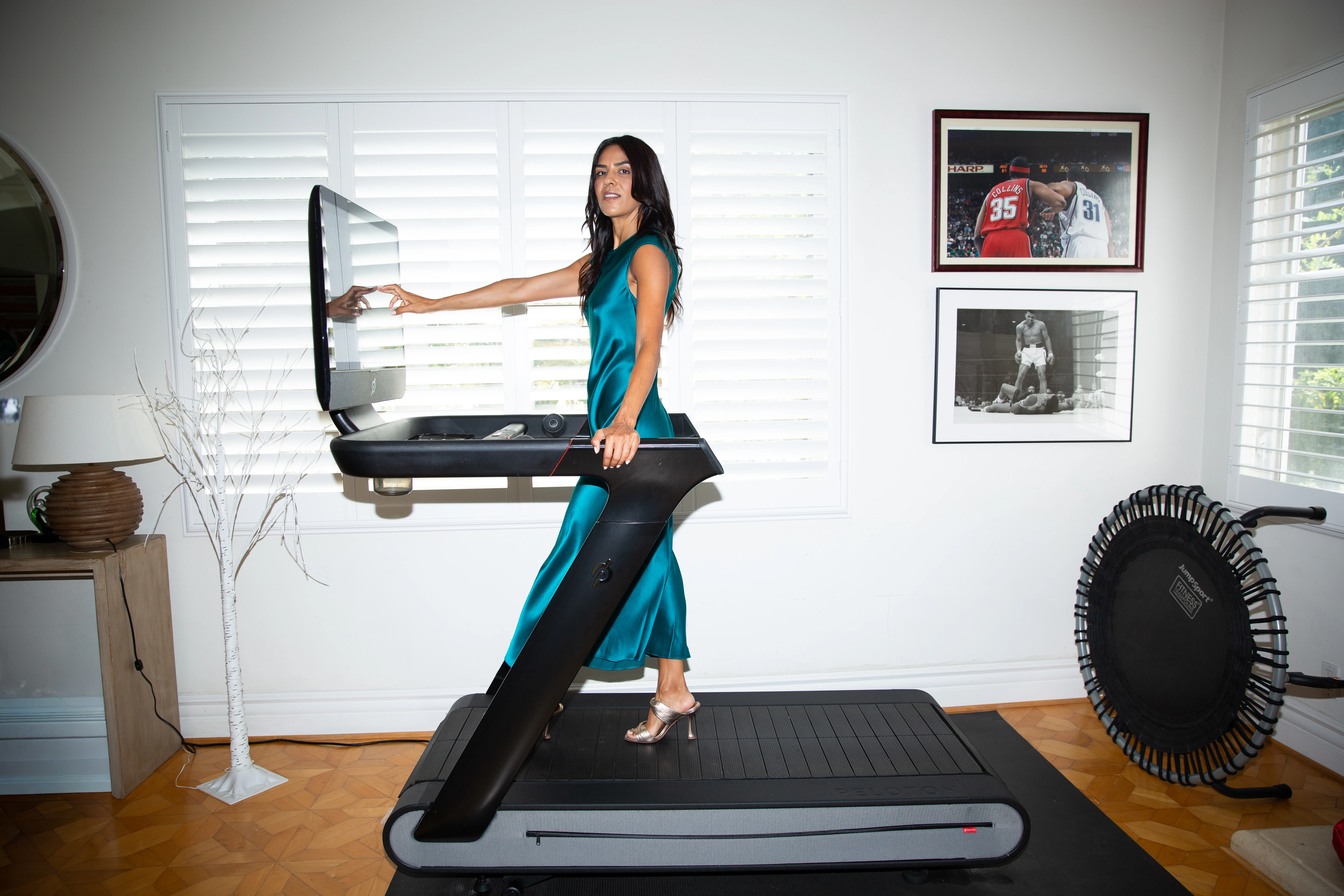
On the harder days, I find that getting on the treadmill or doing some kind of physical activity helps me release some of what I’m carrying.