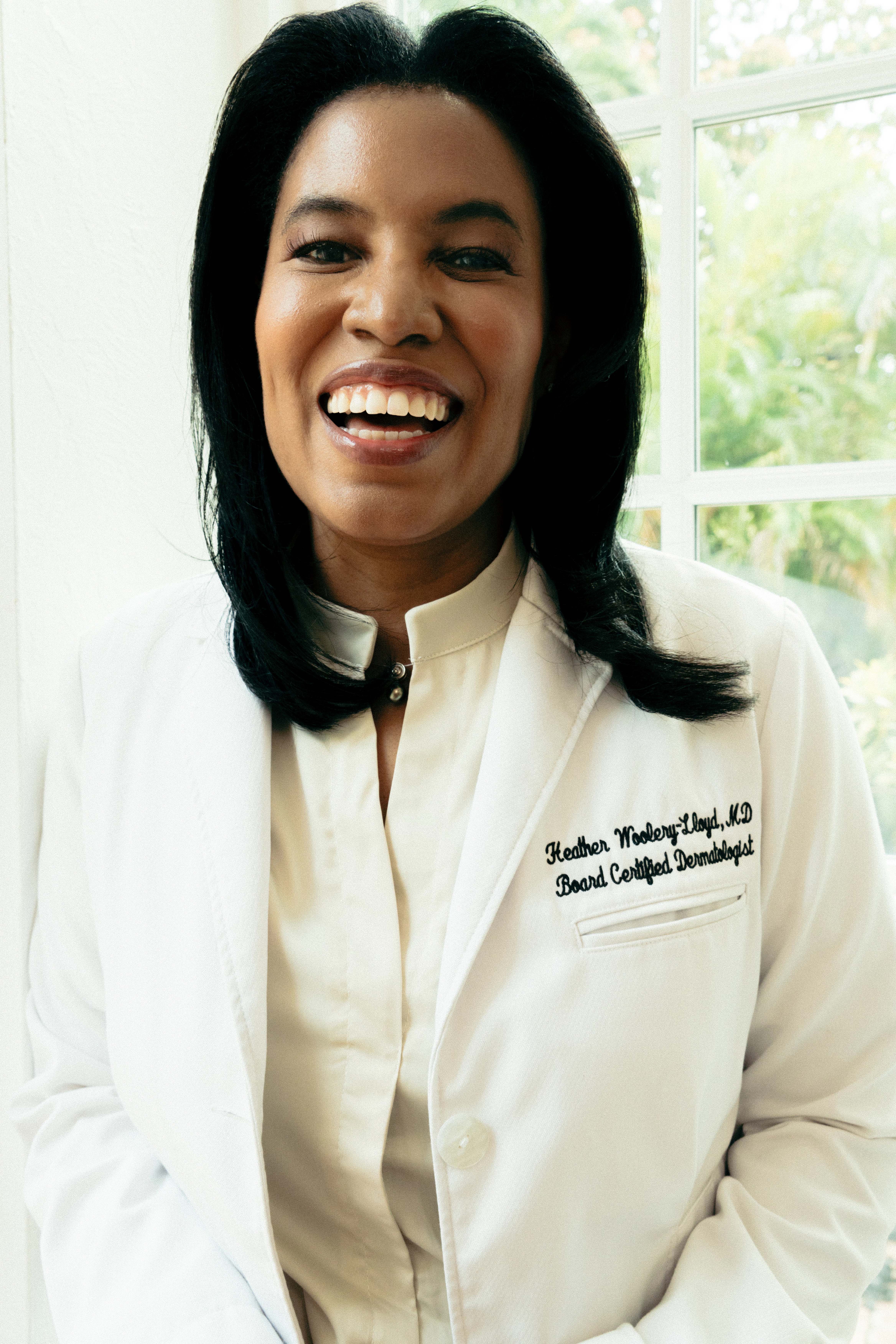
Getting Sticky with Dr. Heather Woolery-Lloyd
This post is presented by our friends at Nutrafol, the best-selling hair growth supplement brand* trusted by over 1.5M people for hair health. Dr. Heather Woolery-Lloyd is a proud partner and happy customer of Nutrafol.
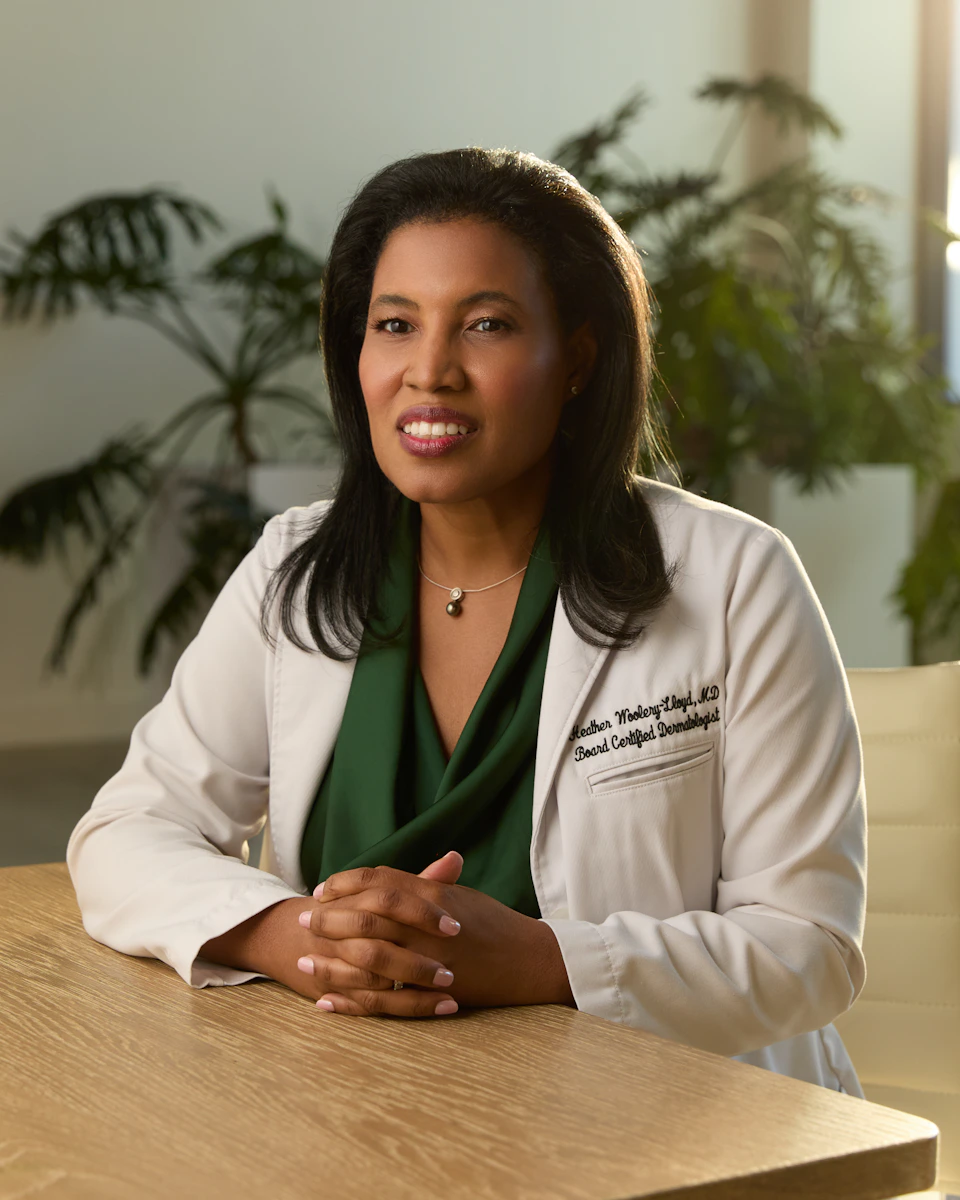
Dr. Heather Woolery-Lloyd, MD, FAAD is a board-certified dermatologist and board-certified in Lifestyle Medicine, and serves as the Chief Medical Advisor at Nutrafol. She’s also a mom to a teenager and a young adult, and that lived perspective shows up in how she speaks with her patients.
As a dermatologist, she talks to women every day about the ways their bodies shift over time—hair shedding, skin changes—and how disorienting those changes can feel when they arrive. It’s a vulnerable transition, and one she reminds her patients is not only common, but often temporary, with real approaches that can help along the way.
That same mindset carries into motherhood. The phases that feel all-consuming—sleep regressions, hormonal swings, toddler tantrums—do pass. We promise. And yes, we’re right there with you, bleary-eyed and exhausted as we type this very feature.
Below, hear from Dr. Heather Woolery-Lloyd on learning to appreciate the teenage years (turns out, bigger kids don’t always mean bigger problems, hooray!), leaning on women with older children for perspective, and what she tells patients navigating hair shedding and the many changes that come with it.
Photographs by Sofi Perazzo. Words by AnaMaria Glaven.
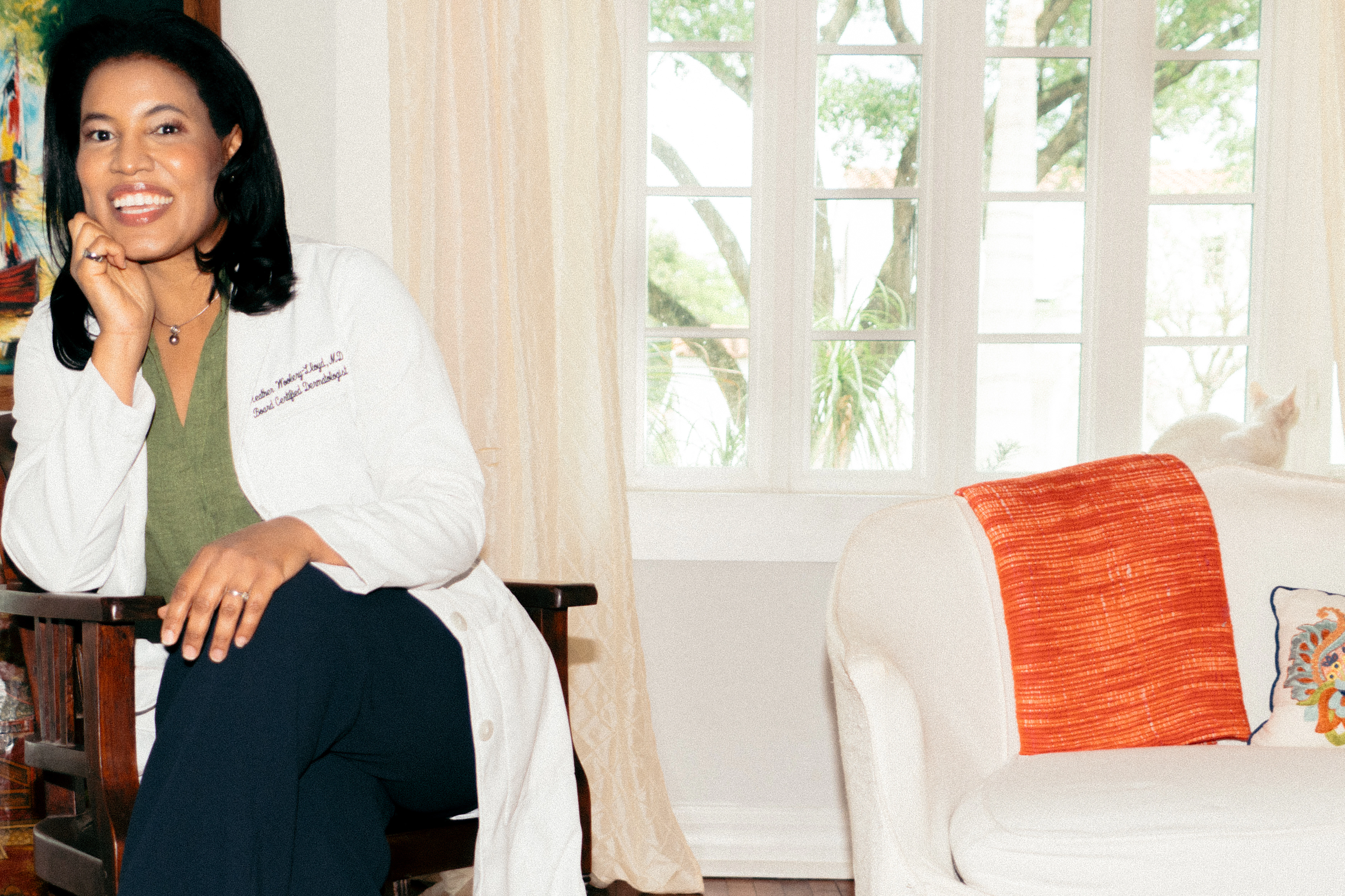

"When I think about how difficult the early stages were for me, I remember dealing with so many changes in my own body. I experienced hair shedding after pregnancy, and postpartum thinning is so common for many women."
The teen years are the best years (at least, for some moms)
I’ve found that everyone considers different stages of motherhood to be more difficult. For me, the baby stage was the most challenging because my job is to know how to fix a problem. And when you have a baby, you sort of have no idea what’s going on when they’re crying. Are they hungry? Do you have to change them? It was very overwhelming.
And as a physician, I had to make a huge effort not to be my kid’s doctor, because all the little things you don’t know feel overwhelming. My son was born with a patch of white hair in the back of his head, and as a dermatologist, there are syndromes associated with white hair at birth. I had a panic attack. Then someone pointed out that a family member had the same thing, and I realized it was just a birthmark.
I do feel like nobody talks about how hard the baby stage is. People say, “Enjoy this time, it’s so wonderful,” but I found it extremely confusing. Two years old was really the hardest phase for me. I always say two-year-olds are really 40-year-olds trapped in a 2-year-old body. The tantrums are because they can't communicate what they want, but when you're in the thick of it, it is so overwhelming.
I love my current stage of having teenagers and a young adult child. I have a 16-year-old boy and a 20-year-old girl, and I feel more connected because we can talk and have real conversations. I know a lot of people don’t love the teenage years, but I absolutely love them.
WHY AM I SHEDDING!?!?
When I think about how difficult the early stages were for me, I remember dealing with so many changes in my own body. I experienced hair shedding after pregnancy, and postpartum thinning is so common for many women. This type of hair thinning can occur after a major stressful event, such as a car accident, hospitalization, general anesthesia, and, yes, childbirth. So the hair thinning we see postpartum is related to both the stress of childbirth and the major hormonal changes that ensue. It pushes the hair out of the active growth phase into the resting and shedding phase, and you can see hair thinning three to six months later.
Hair growth nutraceuticals like Nutrafol Postpartum address key root causes of hair thinning. So if you’re even slightly concerned about thinning after having your baby, don’t wait. That’s a big piece of advice. Some studies say you need to shed 30-50% of your hair for it to be very visible, so if you think you’re thinning, you probably are (sorry).
There are also lifestyle changes that can help with this. I’m board-certified in lifestyle medicine, too, which focuses on how lifestyle influences health and wellness. Managing stress is probably the most important thing, though it’s hard to tell a new mom to “manage stress.”
Try to get outside for a walk or fit in any kind of exercise. Even five minutes of guided meditation can make a difference; it doesn’t have to be a big commitment. Just taking a short break from your phone or screen to sit quietly can help you reset. I like to do this at night.
Nutrition is also important. Prioritizing protein is key because our hair grows from the scalp, and we need it to maintain a healthy scalp foundation. The scalp has its own microbiome—all of the bacteria, fungus, and microorganisms that are supposed to be on our skin. The key is to use microbiome-friendly products. Nutrafol’s Root Purifier Shampoo is microbiome-friendly and holds the MyMicrobiome certification, meaning it doesn’t disrupt the skin’s natural balance. Scalp serums like Nutrafol’s replenish hydration to the scalp, providing an optimal environment for hair to grow and thrive.
Avoiding high heat is important, too—things like flat irons and high-heat blow drying. And avoid tight hairstyles! A low ponytail puts less traction on the hair than a high ponytail, so that’s a better option. Claw clips can also be helpful since they create less tension than a tight ponytail.
"This type of hair thinning can occur after a major stressful event, such as a car accident, hospitalization, general anesthesia, and, yes, childbirth. So the hair thinning we see postpartum is related to both the stress of childbirth and the major hormonal changes that ensue."

“Prioritize what makes you feel good”
I talk to so many women at different stages, and body image is a huge topic after having a baby. Your body changes, and that’s okay, but it’s hard to accept that, and it does take time. The transition was really hard for me.You might have to buy new clothes and you might not be able to wear what you wore before, but doing things that make you feel confident is key. (I always wore a scarf, for example, to hide my post-baby bump.) Postpartum can really impact self-esteem, with hair thinning, body changes, skin changes, all of it. Prioritize what makes you feel good.
Sleep is another big part of this equation because sleep is always hard for moms. Sometimes you’re not sleeping because you’re worried or thinking about everything you’re responsible for—your kids, your job, your home, your family. It’s hard to fully switch off, and it sometimes feels like you’ll never sleep again, but I promise that’s not true.
"I’ve found that everyone considers different stages of motherhood to be more difficult. For me, the baby stage was the most challenging because my job is to know how to fix a problem. And when you have a baby, you sort of have no idea what’s going on when they’re crying. Are they hungry? Do you have to change them? It was very overwhelming."
It’s okay if pregnancy isn’t your favorite era
I always tell my friends, especially when they’re pregnant or have just had a baby, that I am the person they can call when they want to complain. Complain to me all day and don’t feel guilty! This is a topic I’m very passionate about. A lot of women feel guilty because they know how hard fertility can be; but sometimes they hate being pregnant. I hated being pregnant, personally. It was not fun for me. And you need a safe space where you can say, “I don’t enjoy this.”
It’s so important to find your tribe; the people you feel comfortable talking to about these things. You need people who understand that everything isn’t just flowers and roses, people who can relate, give advice, or just listen.
Finding that tribe is not easy for everyone but I was lucky in some ways. A lot of my close friends were fellow physicians, and we were all going through similar things at the same time. Our paths are very structured—you go to medical school, then residency; so many of us ended up having kids around the same time. There were moments when there were four pregnant women in the office, which was amazing.
I also made friends through “mommy and me” type environments and just through everyday life. I live in a neighborhood with lots of kids, so I would meet people by walking around with a stroller and just saying hi. Some of my closest friendships started that way, and we’re still friends today.
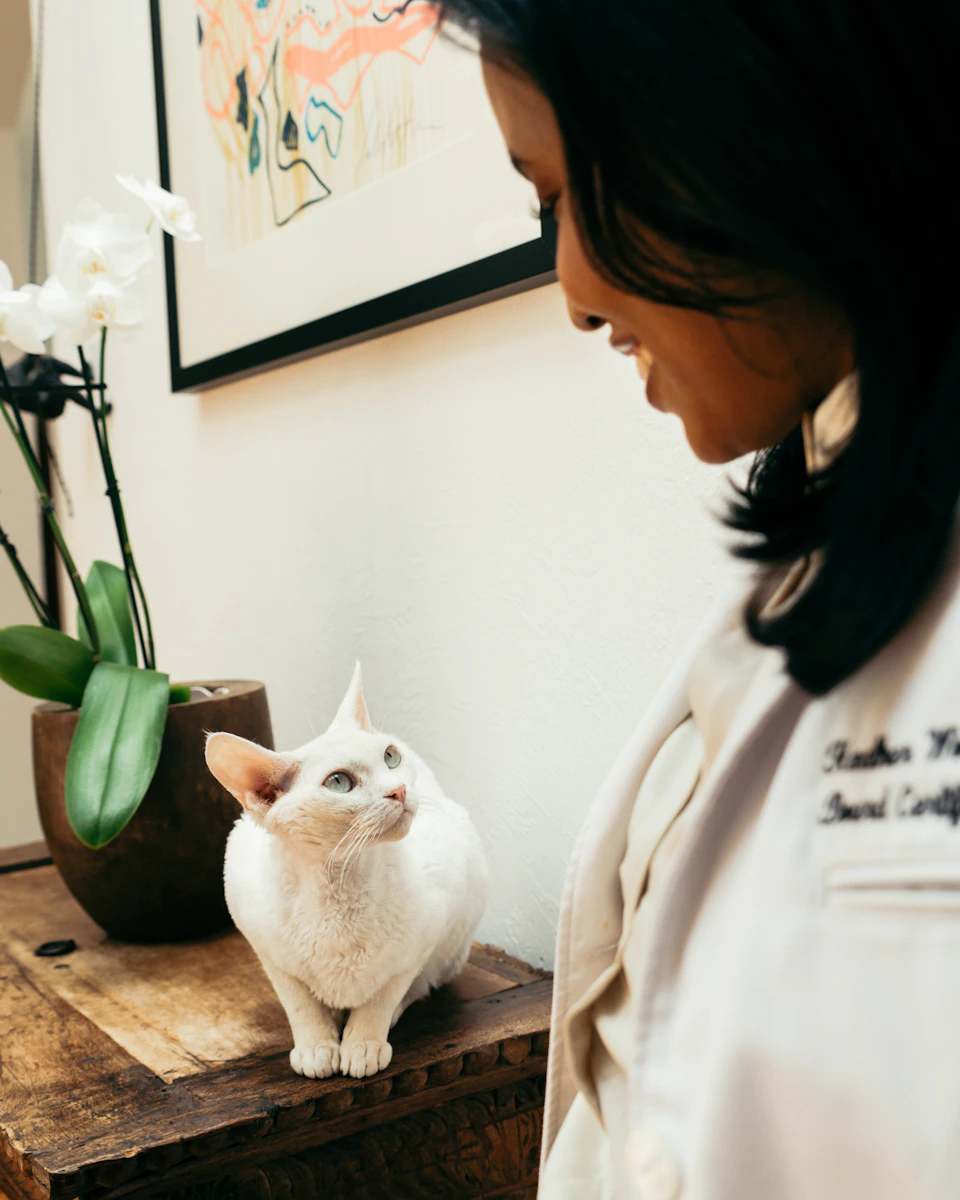
"I love my current stage of having teenagers and a young adult child. I have a 16-year-old boy and a 20-year-old girl, and I feel more connected because we can talk and have real conversations. I know a lot of people don’t love the teenage years, but I absolutely love them."

On the best advice she’s received from other moms with older children…
When you’re in the thick of it—with toddlers, not sleeping, your house a mess, toys everywhere—it can feel overwhelming. But connecting with moms who are a few steps ahead can be incredibly helpful.
One piece of advice that stayed with me came from a friend who lived in Philly and worked in New York. She had teenage children, and instead of staying overnight for work, she would always take the train home because she wanted to know who her kids had lunch with that day, who they talked to, who their new friends were. It resonated because we focus so much on being present during the baby stage, but those middle and high school years are just as important—being there, being present, and knowing what’s going on in their lives. Another great piece of advice I got was that you’re not going to be there forever, and one of the best things you can do for your children is to teach them to be independent. It might not feel relevant when they’re babies, but that independence really matters as they get older.
Every child is different, of course. There’s no one-size-fits-all approach, and no two experiences are the same. Sometimes people assume their second child will be like their first, for example, and then they wind up being completely different. That’s the big final piece of advice here;don’t assume every stage or every child will feel the same. I remember the first time I told my son “no,” and he just said “okay” and walked away. I was shocked. I was ready to explain everything, and he just accepted it. It was amazing.
If I could tell my younger self anything, it would be to relax. It can feel overwhelming, but nothing has to be perfect, and most hard moments are just phases. Kids grow and change and so do you. Give yourself grace. You are not meant to do everything perfectly, and that is okay. Motherhood changes you, but in a way that takes time to understand and grow into.